Showing posts with label Octoberfest 2017. Show all posts

Tuesday, October 31, 2017

Octoberfest Wrap-Up

Hi! I know I said on Saturday that I wanted to end things on one final creepy note, but somewhere in the last couple of days I realized that I liked this year's series the way it was and wanted to end it on the lineup, which I usually try to put in right at the end. I didn't want to share another makeup or last-minute costume post, and didn't have the time or energy to put out another long post on a specific topic. So I decided to end the series on the TCM lineup. I probably should have mentioned that before now though. lol Honestly, I didn't really come to a decision about that until last night; I'd been debating it since Sunday and didn't know what I was going to do yet. I doubt anyone was waiting with baited breath anyway. lol But yeah. Even though this is technically my shortest Octoberfest with 10 posts, I'm still pleased with the end result and the variety of things we learned about this month. I hope you are as well and that you enjoyed reading them all, whether they were short or long entries. 

As I say with any month-long promotion but especially with Octoberfest and Black History Spotlight, I really do enjoy spending this time with whoever decides to give me a few minutes of their day, and I hope that you leave my blog having learned something new. Even if your main takeaway is that I'm a long-winded hole, at least you've learned something. lol Now that I no longer run this blog on a regular basis, the few times of year that I do come back feel all the more special because there's no regular schedule to get back to afterward. I often leave this place for months at a time because 1-I don't have anyone I'm letting down, and 2-like I said last year, something in me has changed. I talked about it last year, and nothing's changed since then except that I now have some understanding about what exactly it was that changed. As a result, I just don't have the heart nor the time to dedicate to blogging about vintage full-time. I continue to notice this with vintage bloggers; the landscape has changed dramatically from when I first started getting into vintage. Most of the vintage bloggers I used to follow religiously have since moved on to other things and closed their blogs and in general, I don't see many people talking about it anymore. The understanding I gathered was that we spend a few years of our lives immersed fully in the lifestyle for various reasons, then something happens to shift our perspectives or we simply grow out of it, and just like that it's over. We'll still wear the clothes, still roll our eyes with contempt when mainstream decides vintage is 'in' again then proceeds to water it down, and we'll still love vintage overall. We just aren't in love with it anymore. How corny was that last sentence, right? Sorry. lol 

But it's true, at least for me. For me, I spent the majority of my 20s in love with vintage. It became part of my identity, something that made me unique, something that made me me. As such, it was extremely weird--and a little disheartening--for me to realize that I no longer wanted to be a full-time vintage blogger. Part of the fun in being interested in vintage was sharing that with others, so not having that desire at the same level made me a bit angry with myself at first, as stupid as it sounds. I sort of felt like I was losing a bit of my identity by losing the gusto I had for vintage, and for some weird reason I felt guilty, like I was being fickle with my interests or something. I still feel like that, a little. But the only things that have really changed are that I'm no longer romanticizing vintage as a lifestyle, which was a healthy move in the right direction, and I'm no longer blogging about it full-time, which harms exactly no one. lol Everything else is the same. Still love the fashion, still love learning about the history, still love the movies. I just don't have the same burning desire to document and drown myself in it anymore. I'm just quieter about it now, I guess. Also, having a TNT every week for years was starting to hit me hard come SUTS time. LOL So I backed off of those indefinitely; otherwise I'd have eventually run out of movies for certain people because everything would have been previously featured. You can look back through my SUTS archives and see that was already starting to happen with certain people, more so entrants who'd been featured during a previous SUTS I covered. That number of previous entrants grows each year, so just by logic I knew it was going to continue to get worse, especially if I continued to do a movie a week. The original intention was to take a year off and let the lineup refresh, but I'm not sure right now. I'll keep you updated though. 

The reason why I stepped away goes a bit deeper, which I touched on a bit last year, but in short, I'm not in love with vintage enough anymore to continue writing about it all the time. I wasn't very comfortable saying that when I realized it last year and I'm still not too comfortable with it, but I've accepted it. As such, only three times of year have felt appropriate to come back, which is why those are the only times you saw me this year. Excluding a couple of random IG Series posts, I probably won't be back until Black History Spotlight in February, which I obviously hope you'll be joining me for. If something changes or there's something I really want to share, of course I'll be here. But if not, I'll be back bright and early February 1st. With that said, I hope you had a safe Halloween and I hope you have a holiday season full of good times, good food and love. 

Thank you again for spending a little time with me. I appreciate it. 

I'll see you soon!

post signature
Read More »

Saturday, October 28, 2017

Octoberfest 2017: TCM Halloween Lineup

Hi! With Octoberfest wrapping up on Tuesday, I always show the lineup of films on TCM for Halloween a couple of days early in case you're part of #ATVLoserSquad like me and intend to spend the night in your pajamas (costume optional), curled up with food and films to keep you company. The previous years I ended the series with the day's lineup and last minute Halloween makeup ideas but this year I wanted to end it with one last creepy post instead, so I moved this one up a couple of days. Here's this year's TCM lineup for Halloween.


Movie lineup (all times in EST):

6:00am I Remember Mama (1948) Irene Dunne, Oscar Homolka, Barbara Bel Geddes
A nostalgic drama about the daily ins and outs of a Norwegian family living in San Francisco in the early 1900s. 

8:30am White Zombie (1932) Bela Lugosi, Madge Bellamy, Joseph Cawthorn
A witch doctor is asked by a young man to lure the woman he desires away from her fiance, but the witch doctor turns her into a zombie slave instead. 

10:00am Mad Love (1935) Peter Lorre, Frances Drake, Colin Clive
A mad surgeon in love with a married woman agrees to fix her pianist husband's injured hands, but instead grafts the hands of a murderer onto the man's wrists. 

11:30am Dementia 13 (1963) William Campbell, Luana Anders, Bart Patton
Members of an Irish family start to die one by one as a greedy relative seeks to claim the family fortune for themselves.

1:00pm 13 Ghosts (1960) Charles Herbert, Jo Morrow, Martin Milner
A clean-cut American family inherits a house haunted by 13 ghosts and a creepy housekeeper.

2:30pm The Fearless Vampire Killers (1966) Jack MacGowran, Roman Polanski, Alfie Bass
A professor and his assistant travel to Transylvania to hunt and kill vampires and get into a bit more than they bargained for.

4:30pm House of Wax (1953) Vincent Price, Frank Lovejoy, Phyllis Kirk
A sculptor whose wax museum is destroyed in a fire rebuilds using human corpses as his new showpieces.

6:00pm Poltergeist (1982) Jobeth Williams, Craig T. Nelson, Beatrice Straight
A suburban family's home becomes a gateway for evil spirits to abduct the family's daughter and take her to the paranormal plane.

8:00pm The Old Dark House (1932) Boris Karloff, Melvyn Douglas, Charles Laughton
A storm strands a group of travelers in a mysterious household of eccentrics and a strange butler.

9:30pm The Haunting (1963) Julie Harris, Claire Bloom, Richard Johnson
A team of psychic investigators moves into a haunted home said to destroy all previous inhabitants.

11:30pm House on Haunted Hill (1958) Vincent Price, Carol Ohmart, Richard Long
A millionaire offers a group of strangers a lump sum of his money if they can last an entire night in a haunted mansion. 

1:15am The Cat and the Canary (1939) Bob Hope, Paulette Goddard, John Beal
An attorney fights to protect the sole heiress to a creepy estate.

2:45am The Old Dark House (1963) Tom Poston, Robert Morley, Janette Scott
A remake of the 1932 film of the same name, a millionaire invites a car salesman to visit his decaying home.

4:30am The Bat (1959) Vincent Price, Agnes Moorehead, Gavin Gordon
A mystery writer rents out a spooky mansion for the summer but turns amateur sleuth as she and her maid attempt to hunt down a killer.


While I was going through this year's list, I thought a lot of the movie titles looked familiar. I didn't think anything of it at first; I've seen many of these films before. But when I went back to previous Halloween lineup posts to make sure I was formatting this one correctly, that's when I realized that many of today's films were on the lineup in 2015. A couple of them were on that list, last year's and this one. I'm guessing they're TCM signature films for Halloween, but hopefully next year's list has a little more variety. I'm complaining, but I'm still gonna watch. lol I'll see you in a few days with the last post in this year's Octoberfest!


post signature
Read More »

Wednesday, October 25, 2017

Octoberfest 2017: Medieval Torture Methods


Hi! Unlike a few of the other posts in this year's Octoberfest, today's topic had a plethora of information available for me to look at. I was actually expecting this to be one of my more difficult posts to complete because I'm talking about medieval times, but apparently, people really enjoy reading about how humans enjoy torturing each other. I can't really judge them because I'm one of those people and today, so are you. lol Anyway, something I've read a lot about over the years was how barbaric and inhumane many medieval torture methods were, so I thought we'd explore a few today. 

Disclaimer time--because there are so many lists like this, there's obviously going to be some overlap between their lists and mine. I used the lists to find the names of the methods, but only picked a few I liked from each list. Because each list I saw has more or less the same names, this probably looks extremely similar. Not the intention at all. I only used the lists for the names; I looked up the information following those names separately. Okay, so now that I've gotten today's usual disclaimer out of the way, let's get started!


1. Keelhauling

Source
Keelhauling was a practice used by the navy during the 1600s and 1700s, but was phased out midway through the 1800s for being inhumane. This was a commonly used method of punishment for sailors and was perfectly legal in its heyday. As you can see in the photo above, the sailor is stripped and tied, with weights holding down his legs to prevent him from swimming. A rope stretches underwater and attaches to both sides of the ship, and this would pull the person along quite roughly as the ship sailed. Underneath the ship is the keel, or a layer of very rough barnacles which would cause painful scarring on the person's back due to the vigorous dragging. I imagine the wounds combined with the saltwater made the cuts prone to infection so if the person didn't die from that or drown, the scars were used as a reminder of the repercussions of not following the rules. 

Research resources:
1


2. The Brazen Bull


This method of punishment was a new one to me but it's pretty brutal. The picture is a visual explanation of what The Brazen Bull was, which was developed and used in ancient Greece before being revived during the medieval period. This bull is made entirely of bronze but splits in half and is completely hollow on the inside. The person was then made to enter the bull and the opening would be locked from the outside, and a fire would then be lit from underneath the bull. The fire would heat the bull so much it would redden, and the heat would literally roast the person inside to death. The hollow insides caused the person's screams to be amplified and echo back to them, further adding on to their agony, and as the person's screamed, tubes connected to the bull's head would transform their screams into a bull's bellow. Prisoners who were jailed for treason or religious conflicts were commonly executed publicly in this manner. 

Research resources:
1


3. The Head Crusher

Source
This was another popular torture device used on prisoners during medieval times, and it resulted in both a slow and immensely painful death for the person. It also resulted in an extremely graphic visual for any onlookers as it hid nothing. The name of the device is pretty self-explanatory in what it would do to the victim; but I'll explain the rest of the device. The person would place their chin over that bottom bar and their head inside the cap, and the executioner would then turn the screw at the top of the device. It functioned as a crank, slowly pressing the device tighter and tighter on the person's head, compressing it until it crushed. This was used during interrogations to force confessions or information out of someone but if the person had been under there long enough, whether the screw had been turned fully or not, the damage was usually irreparable and permanent. In executions, it would eventually crush the person's skull, causing their eyeballs to pop out, followed by blood, tissues and et cetera as the person's skull collapsed. Sounds disgusting. 

Research resources:
1


4. Scaphism

Source
Scaphism is another particularly brutal method of torture that was used during medieval times but unlike the skull crusher, was reserved specifically for executions. Now the average prisoner wasn't often given scaphism, or 'the boats,' as their penance. The crime had to be worthy of the punishment, because scaphism was in a class of its own. Prisoners executed in this fashion were given a diet of nothing but milk and honey, which would give them diarrhea, then they were restrained to a boat either by being trapped inside of it or tied to it and pure honey was poured over all exposed parts of the body, focusing on the arms, legs and head. The boat was then left out in the sun or in a stagnant body of water, where insects and rodents would come in droves, attracted by the scent of honey, and eat the person alive. The cuts would infect over time, maggots would lay eggs in the decaying flesh, and the maggots would do the rest of the work. Smaller insects burrowed inside the person's body via open wounds and they would begin eating the person from the inside out instead. The prisoner would continue to be force fed the milk and honey diet, forcing them to wallow in their own excrement, which would cause the cycle to repeat until the prisoner died.  

Research resources:
1


5. Judas Cradle

Source
This torture device seemed no less painful than the other methods I've mentioned so far, but it does have a different take than the four that preceded it. This method was used to force confessions and the technique used differed slightly, but it was also used in executions. The pyramid figure on the top of the stool would be inserted into the prisoner's anus or vagina and the person's legs would be tied together in such a way that moving one leg would automatically move the other, further impaling them on the pyramid. In some cases the person's feet were also weighted down, but this was more for executions rather than forced confessions. For forced confessions the person would repeatedly be impaled by the pyramid until authorities got the information they were looking for. Infections were quite common with this device so I suspect most of the individuals who were forced onto this for the purpose of a confession likely died afterward as well. In the long run, it's not much different than if they'd been executed from jump using this method.

Research resources:
1


6. Flaying

Source
Flaying is just a shorter way to refer to someone being skinned alive, which is what is being depicted in this photo. This was used as both a torture and execution method, but the end game was always death. If the person's crime justified a harsher punishment, the person would be left outside in the sun, where their skin would boil and burn. A shorter but no less painful method would be dipping the person into a large pot of boiling water, but pulling them out just before they are boiled alive. Even if the person was not meant to die using this method, damage to skin, nerves and tissues was irreparable at this point and if they didn't die of those wounds directly, they'd die of the infection that was sure to set in on said untreated burns. As for executions, after the skin was primed, the person would be laid flat and the first steps to removing the skin would begin. Relief cuts would be placed at strategic places on the body, as the goal was to strip the skin from the body at once, starting with the face. The goal was to have large sheets of skin rather than smaller strips because flayed skin was usually displayed as an example to others not to make the same mistake. Without the protective layers of skin, the entire body becomes as susceptible to infection as it'll ever be, and this likely killed a significant number of those who had been flayed. Hypothermia is another likely side effect that killed people, again due to the loss of protective covering. For some prisoners, losing consciousness due to pain was not an option, and the person was beaten to stay awake. If it was a fast killing, the pain would be inflicted all at once so the person could die, but if it was meant to be torturous the executioners would not allow the prisoner to fade in and out. Unfortunately, for many people this was not a quick death and many hung on for days, in agonizing pain, before finally succumbing to their injuries. 

Research resources:
1


7. Pear of Anguish

Source
The Pear of Anguish is a torture device that was also meant to provide sexual mutilation or humiliation to its victims, similar to a couple of the other items on this list. People who found themselves on the receiving end of punishment via the pear were people who assisted in either having or helping someone else have a miscarriage, homosexuals, liars, witches, and those who spoke against the Church. There was an oral version of this device but that was reserved for heretics. This small contraption is called a pear because of its shape; the body is comprised of four small 'leaves' that fold into itself when not in use, mimicking the shape of a pear. The device would be inserted into the person's anus or vagina, with a crank on one end protruding from the genitals. Once it had been inserted, the executioner would turn the little crank at the top, unfolding the leaves and causing shredding to the person's insides. Some had poison on the tips of the tiny blades at the ends of the leaves, and this would result in a quicker death. The regular run of these would shred the person's insides but wouldn't kill them. It was usually used in conjunction with other torture methods and most of these were hardly ever cleaned, so infection was known to settle in quickly and the person would eventually die regardless. Without the poison tips though, this wasn't fatal when used alone. 

Research resources:
1 | 2


8. Lead Sprinkler

Source
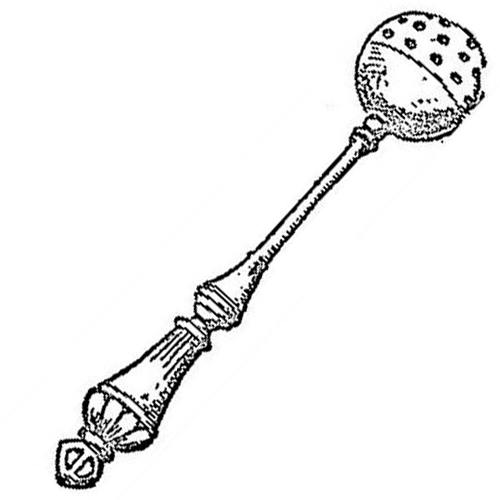
I remember seeing a scepter like this in an episode of Looney Tunes once, but I didn't know similar things were used as torture devices. lol Rather than beating someone over the head with it a la Bugs, the circular end of this device was detachable, and it was usually filled with molten metals or boiling liquids. The top would be reattached, and the executioner would then hold the sprinkler over the prisoner, dousing them in the metal or liquid pouring through the little holes at the top. A favored way to use this was to fill it with molten silver and drip it over the person's body by either shaking, holding or flicking the sprinkler in the person's direction, then finish them off by pouring the heated metal in their eyes. 

Research resources:
1 


9. Garrote

Source
What an awful way to die. The garrote, much like many of the other items on this list, has a long and rich history stretching back before the medieval period, but was used during that time period for its effectiveness. As you can see in the photo, the person would sit on the small seat and some sort of chain (this depended on the area and preferred item) that was attached to both sides of the bar would be placed around the person's neck, effectively locking them in. The executioner would stand behind the person and turn the handle, which would gradually tighten the chain around the person's neck until they died. Later models of the garrote would install a spike in the bar, which would penetrate the person's spinal cord as the chain tightened and forced them against it. This would break the neck and hasten death. Garrote executions were held publicly for most of their existence, but when prisons began making executions more of a private affair and phasing out some of the harsher execution methods, the garrote ended up on the list of methods to scrap.

Research resources:
1 


10. Ducking Stool

Source
I want to say I remember mentioning this during last year's witchcraft post but I can't clearly remember if I did or not. I may have just read about it. This method of execution was one favored by witch hunters and was meant to either force a confession out of an alleged witch or kill her. It's rather self-explanatory; the alleged witch was tied into a chair, which was then lifted above a body of water and dangled over it using ropes. This would allow the executioners to raise or drop the chair as needed into the water. The chair would then slowly descend into the water and in many cases would be completely submerged for a time in hopes of getting a forced confession. If the witch confessed after being brought up--and many of them did to avoid being drowned--she was executed. If she did not confess, she would be dunked, again and again, spending varying periods of time underwater until she either confessed or drowned. Criminals were also subjected to this punishment in an effort to force a confession, but the method received most of its publicity from its popularity during the witch trial days. 

Research resources:
1 


11. Breast Ripper

Source
This here device was created for and used exclusively on women. Big whoop for us, right? This method of torture was used on women who'd committed adultery or had an abortion, and as sexual mutilations were favored forms of punishment back in the day, this was a common punishment. These clamps, which were made out of iron or another metal, were heated and applied to the woman's breast while she was tied to a wall. These were used to either mutilate and permanently brand the woman for her crime, or rip off her breast completely. This resulted in lifelong embarrassment for the woman, which was the point. While I was trying to find a source for this method, I saw a peek at an article about ISIS, and female mutilation using similar tools to the Breast Ripper are apparently still being used today. 

Research resources:
1 | 2


12. Knotting

Source
This method of punishment confuses me a bit in the sense that I've gotten two different explanations of what they are, only one of which I've been able to corroborate, which isn't the one depicted in this photo. lol Let me explain. The first explanation I got of knotting was the human knot, which twisted the body into a pretzel of sorts by tightly binding a person's limbs and joints with ropes like in the photo above. The person would then be twisted, breaking the bones. But the explanation that I have seen more often is that it was a punishment for women, those with long hair, to be specific. A large stick would be twisted into the woman's hair and the executioner would continue to turn it until all of the woman's hair was caught up in the stick. If he ran out of strength, someone else would step in and continue to turn it until the woman's scalp was ripped off, exposing the skull underneath. 

Research resources:
1  | 2


13. The Wheel

Source
Finally, this method, which is also referred to as the Catherine Wheel or the Breaking Wheel, is a method of torture that was used to execute prisoners in an extremely painful fashion. This wooden wheel had spokes going around it and the person would be tied to it, and the executioner would then lash their arms and legs. As the photo shows, two torturers would handle the execution. The device received its latter nickname from the manner in which it would crush the person's bones. While the person was tied up to the wheel, a torturer would lash the person's body with a club or cudgel. If the prisoner was to die quickly using this method, the bones would be crushed on the wheel and the lashes would be more strategic. If the person was to die a slower death, the torturers would still hit them but would drag the torture out for days until the person finally died. Other times, the person was beaten and simply left to die on the wheel. As an example to others or a show of power, sometimes the body was left on the wheel afterward. 

Research resources:
1


Today's post--and the entire basis of Octoberfest, really--can be summed up in three words: Humans are brutal. lol I was originally going cut this off at 10 things, but because there were so many methods available and to make up for the other shorter lists in this year's series, I stretched this one out a bit more and added a few more things. I figured medieval torture devices were gruesome but good grief. I grossly (literally) underestimated just how bad they were. It's almost like humans are never more tickled than when they find new ways to maim, control or hurt each other sometimes. That's just my view, but I'm realizing that I've become a pessimist so maybe I'm a little biased. lol Anyway, I hope you enjoy today's post and I'll see you in a few days!


post signature
Read More »

Sunday, October 22, 2017

Octoberfest 2017: Fatal Families Part 2


Hi! I think every year I try to cover at least one edition of killer families, couples or teams. Unfortunately, for the time period I usually try to find names for, I'm running out of gas so this might be my last edition of Fatal Families; I'm not entirely sure just yet. This time around, finding names was a little easier because there were so many lists up on various serial killer teams, but the problem was that they all looked like the same list after awhile. The names repeated on several different lists, so I wasn't able to pull out a bunch and create a list that looked different. I still tried, though. lol Per usual, I apologize for any similarities you see between this list and others; while I looked at different lists for names I hadn't used yet, the intention was not to copy anyone's exact list or content. I found the names, then used entirely different websites to source the info. Because the lists were so similar, I was only able to create a list of 5 names. Let's get into them!


1. Staffleback Family

Source
I want to say it was a couple of years ago during my first post about fatal families that I talked about the Bender and Kelly families, who both went on murdering sprees in Kansas back in the 1800s. There was another murderous family on the loose in Kansas some time later, the Staffleback family. The photo I included with this story is of the matriarch, Ma Staffleback, who was also known as Galena's Bloody Madam. Before their primary claim to fame in Galena, Kansas, the family was already known locally for being career criminals who'd carried out numerous petty crimes and serving time, but their gorier crimes, as well as their pasts, would eventually come out as well. At some point they moved to Galena and bought a rundown home that shared attachments to a nearby abandoned mine shaft, and this became the location for their murders. The location, nicknamed Galena's Murder Bordello, has recently come under dispute for being the actual location because paper documents haven't substantiated the long-held belief that Ma Staffleback owned and operated out of the house. The paper trail is cold, leaving some to wonder if the location now named as being the murder bordello was actually that house or not. This is more important for the local historical crowd, as having the incorrect house obviously would hurt the tourism angle of those wanting to see the house, and many of these infamous murder homes later become recognized as local historical sites, freeing them from potentially being demolished. You can't mark a spot as a local historical site if it's the wrong house. lol But that's a current day dispute. Let's get back to the basis for this house potentially becoming a historical site. 

As I said, Ma Staffleback and her family, her six children (3 males, 3 females) and a son-in-law moved into the house in question. The sources I read differ on exactly what was going on in the house but the majority agree that it was a house for prostitution, or a bordello. Either way, soon after they moved in the murders began. One of Ma's sons, Ed, had a girlfriend who moved into the Staffleback home and she, along with another young woman who witnessed the girlfriend's murder, were beaten to death by one of Ma's other sons, Mike. Mike and Ed's girlfriend got into an argument that turned physical, and Mike beat her to death, murdering the other young woman because she saw what happened. Their bodies were dumped into the mine shaft along with those of a wife of another of the sons who had no interest in prostituting (this was their only means of income and the family was known to trick innocent women into marrying into the family and giving them another girl to sell to clients) and attempted to leave, a salesman and a miner, whose murder got the ball rolling to catch the Staffleaeck family. After he made advances on one of Ma's daughters Emma, he was invited to dinner and rejected, which brought on an argument, and the man attempted to flee. Ma chased him out with a knife and two of the brothers began shooting at him. Despite being shot he still attempted to get away, but one of the brothers caught up to him and shot him in the head. He was already dead by then, but Ma then slit his throat and the body was dumped, along with the others, in the mine shaft. There were two witnesses to the murder and they were initially threatened into silence, but later testified during the trial. Police later found his body in the shaft and this led to the arrests of Ma, two sons and her son-in-law, who were convicted and sent to prison for various charges stemming from the murder. This case led to the discovery of two other murders said to be attributed to the Staffleback family before they moved to Galena, and it is said that dozens of the bordello's clients never came out alive. 

A couple of archived newspaper articles about the case while it was current can be read at the second source link, which detail the findings over a few days while police carried out the investigation. From the bit I read, this sounds like it was a media circus, with a daily crowd at the front of the mine shaft while police looked for bodies inside. A wooden bat with a clump of hair on it was found in the shaft, along with bloody clothes, and during the investigation several other bodies were pulled up, aligning with people who'd gone missing months beforehand. All in all, people attribute nearly, if not over 50, victims to the family. 

Research resources: 
1 | 2 | 3


2. Briley Brothers

Source
The Briley Brothers were a team of three brothers who unleashed one of the worst crime/murder sprees on Richmond, Virginia in 1979. The oldest, Linwood, seems to be the one who got his younger brothers into the criminal life. In 1971, 16-year-old Linwood murdered his neighbor, who was outside hanging clothes, for absolutely no reason. The woman had recently been widowed and was minding her own business, hanging her clothes out on her line, when Linwood shot her with a rifle from his bedroom window. Once police were able to discern that the cause of death was a bullet wound rather than stress (at first, nobody noted the spot of blood in her back so the bullet wasn't uncovered until later), the trajectory of the bullet led straight to Linwood, who admitted it with no provocation--or guilt. After a year in reform school, he was released and over the next few years, the middle brother followed his brother into petty crime and was imprisoned for burglary and shooting at police during his getaway--which I'll get back to later--but otherwise, things were quiet until 1979. The brothers planned a home invasion/murder spree, robbing various homes and people and leaving no witnesses alive to identify them. March to October of 1979 saw them murder 11 people, but the group has since been linked to 9 other murders in the area. 

It doesn't appear that the brothers had any preference in the victims they chose; the youngest documented victim was 5, while the oldest was around 76. Married couples, pregnant women, and on one occasion even a local celebrity fell victim to the Briley Brothers. Much like the victims that were chosen, the procedure didn't seem to follow any rhyme or reason either. A few of their victims were ambushed in their homes, others were ambushed while walking home or leaving a location, and the youngest of the victims was murdered simply for standing by Linwood's car for too long, making Linwood suspicious. They were indiscriminate in the victims they chose, but they were brutal with the manner in which they carried out their crimes. The first two survivors were ambushed in their home, robbed and left to burn to death as the brothers set the house on fire before leaving. Despite being on fire (Linwood had poured kerosene over the man's legs before setting the room alight), the man was able to get himself and his wife to safety. The majority of their victims were robbed, the female victims repeatedly raped, most of them beat, and most were eventually shot in the head. Two elderly victims, a brother and sister, were stabbed and bludgeoned to death. The 17-year-old had his skull crushed by a cinder block. It is assumed that within these various crimes that the other 9 murders they've since been linked to were committed. 

The murder that led to the brothers' arrest was the joint murder of husband and wife Harvey Wilkerson, Judy Barton and their 5-year-old son. Unlike many of their other victims, the brothers were actually acquaintainces of Wilkerson and had been friendly on a number of occasions over the years as the two families lived around the corner from each other. The brothers heard rumors about Wilkerson potentially being a drug dealer and one of the sources lists this as a potential reason for the attack, but I'm unsure. Either way, the brothers were planning their next victims as a bit of celebratory run as the middle brother, who I mentioned earlier had been imprisoned, had been paroled that same morning. At some point, the gang decided on the Wilkerson family and, with a 16-year-old friend named Duncan Meekins, approached the Wilkerson house and over the course of an evening, robbed the house, repeatedly raped Judy (who was pregnant) in front of her son and husband, and eventually shot and killed all three--four, counting the unborn child. What makes this particular case sadder for me is that the police were currently canvassing the area looking for the brothers and saw them enter the Wilkerson house, but were unsure of where they'd heard the gunshots coming from. As a result, they didn't search the apartment or find the family for days, until a welfare check was requested by a neighbor. The brothers had released the family's pet snakes and puppies in the apartment, so crucial evidence had been destroyed in the three days that the family was left in their home. At the time the brothers were arrested, they were wearing bits and pieces of their victims' jewelry, including a ring by a local disc jockey they'd killed, which the victim's friend (who was with the man when he bought the ring and was one of the detectives interrogating the brothers) noticed, which left no doubt as to their guilt. Meekins took a plea deal in exchange for a lighter sentence and the two older brothers were given multiple life sentences without the possibility of parole. The youngest couldn't definitively be linked to any of the crime scenes, so he was given life with the possibility of parole. 

You would think that's where the story ends, but it doesn't. In the mid-80s, the two eldest Brileys were able to escape from prison with a group of other inmates after overtaking the guards on patrol. Their freedom lasted for three weeks, when a wiretap on their uncle's phone led police to their location and they were re-arrested. All three brothers exhausted their appeal requests and a year later, Linwood was executed by electric chair. Six months after that, the middle brother was executed in the same manner. The youngest brother was alive at the time of the article I got my info from, but is in a different prison than his brothers were in. 

The first link in this section will take you to a timeline of events covering all of the Briley Brothers' documented victims, and the second will take you to an account of one of the lone survivors in a case I didn't touch on here.

Research resources:
1 | 2


3. Moors Murderers

Source
"The Moors Murderers" was the name given to a pair of lovers in England who murdered their victims and dumped their bodies in Saddleworth Moor, around Manchester. All of the victims were children, with the eldest only being 17, which dirties this case even further considering what happened to the victims. Around 1963, Myra and Ian's first victim, a 16-year-old girl, was raped and beaten before being stabbed and having her throat slit. A few months later, a 12-year-old boy was kidnapped, raped and murdered. A few months after that, Keith Bennett, who was also 12, was kidnapped and strangled before his body was disposed of. Their youngest victim, a 10-year-old girl, was stripped, gagged and forced to pose for photographs before being raped and strangled. Their final victim, a 17-year-old boy, was beaten and axed to death in front of their only witness, the younger brother of Myra's brother-in-law. It was the young man who brought their killing spree to an end following the final murder, after they let him go home and he was urged to inform the police. The two did not confess their crimes until 1985, after two decades of professing their innocence and telling slightly conflicting stories about what happened to their victims. They did, however, agree that their young witness actually participated in the final murder rather than simply watching the couple commit it, but he has always maintained his innocence. The trial itself sounds like it was a media circus, but I've left those details for the research resources below the story.
Anyway, at a later point Myra, through correspondence with a doctor, expressed a bit of remorse but the British press still had her (correctly) nabbed as one of the most evil women in the land, and all of her appeals were denied. She admitted in the letters that she was not the instigator nor the planner in their crimes, but was a willing and culpable accomplice. She died in prison in 2002 and Ian, who after being declared criminally insane, was transferred to a mental hospital where he claimed his insanity was just method acting, eventually died earlier this year. From the articles I used to source this case, I believe both of them took the location of one of their victims' bodies to their own graves. Keith Bennett's remains were never found, despite their confessions to his murder and repeated requests by police over the years as their health declined with age. Even though Myra was said to be remorseful, this was one of the things she never disclosed. Ian didn't seem to share that feeling of remorse, as his reason for killing his victims was quoted to be "existential experience," rather than admitting that they were simply cold-blooded acts of monstrosity carried out on innocent children. He railed against the system for the right to kill himself and his legal team repeatedly attempted to get his insanity ruling overturned so that he could return to prison, but to no avail. Supposed hunger strikes didn't work, statements against the mental facility didn't work, and even appeals from victims' families to have him returned didn't work. He died there earlier this year, and as far as I know, he did not disclose where he and Myra buried Keith Bennett's body. The local police believe that only a miracle would result in a sufficient reason being granted to reopen the investigation, but the Bennett family has taken it upon themselves to continue searching the moor in hopes of finding their lost relative.
Research resources:
1 | 2 | 3
4. Lonely Hearts Killers

Source
The Lonely Hearts Killers were a couple named Martha Beck and Raymond Fernandez who would use the Lonely Hearts sections of newspapers to bait and lure their victims. Ironically, they chose this method of murder after meeting each other through the same kind of ad. While I believe this was Martha's first foray into lonely hearts ads, Raymond had already been at it for awhile. After an accident caused a traumatic brain injury, Raymond became a different person, abandoning his wife and kids for his newly developed plan to turn wealthy women into his slaves before leaving them penniless and/or dead.  Before meeting Martha Beck he'd already tried out his scheme on a couple of women, one of whom actually vacationed with him and his wife as a trio before mysteriously turning up dead. Tongues wagged that Raymond was behind the death, but nothing ever came of it and he was left free to pursue his next victim. After the woman died, a last will was forged leaving him the heir to her estate which he immediately took advantage of, evicting her mother from the home and moving in to continue his scheme. He was the first person to respond to Martha's lonely hearts ad and for her it was love because he didn't seem to take issue with her large size (she slightly catfished him by not properly showing her size in pictures they exchanged), when he flew to her in Florida, but to him she was just his next mark. Martha surprised Raymond at his home in New York with her two children in tow but Raymond wanted nothing to do with them, so she abandoned them at a Salvation Army. At that point, Raymond came clean about the truth of his lonely hearts ads and to his delight, Martha was not only okay with it, but helped him pick his next marks. The two would pick a victim, then pretend to be brother and sister (or sister-in-law) to explain Martha's constant close proximity, and Raymond would seduce the woman, then fleece her. 

The first victim quickly became a wife, but fled the home after only a few days and was one of the few women to leave of her own volition. One of the other women to marry Raymond shortly after was not so lucky. Even though Martha was okay with the con itself, she was not okay with Raymond getting close to the mark and she especially did not care for them sleeping together. This became an issue with one of the women, and eventually she and Martha had it out. She'd integrated herself so deeply that the 'couple' could not consummate the marriage, which obviously bothered the new 'wife,' and in response, the couple drugged her, robbed her, and left her at a bus station. She died the following day, but the couple had already skipped town. They continued robbing people on their way back to New York but didn't come across another meal ticket for awhile. A New York based woman became the next target, and Raymond did his portion, seducing her and gradually convincing her to clean out all of her bank accounts. Martha did hers as well, integrating herself as deeply as possible into the relationship to ensure it didn't go too far, and again, this caused an issue. The story differs as to who exactly struck the fatal blow, but the 'wife' suddenly turned up dead one morning, having suffered blunt force trauma to the head. This murder ended up being the first nail in the couple's coffin because they made a mistake in the days following the murder. While they were living it up, spending the woman's money, they were sending fraudulent typewritten notes to family and friends, posing as the woman and saying everything was fine. The problem with that was the woman did not own and did not know how to use a typewriter, and they took that to police. 

Yet again, the couple had skipped town and their next mark, a single mother to a toddler, would be the final nail. The couple came into town to 'visit,' and ended up seeing Charles without the toupee that hid the mark from his accident. They had an argument about him deceiving her, and Martha convinced her to take some sleeping pills and rest for awhile. The child knew something was off and wouldn't stop crying, at which point Martha began to choke her. To prevent the child's mother from waking up and seeing the bruises around her neck, Raymond shot the woman in the head and disposed of the body. They held onto the little girl for the next couple of days, but the trauma she'd suffered at watching her mother's murder came out in uncontrollable crying. To keep her quiet, she was eventually shot as well and buried next to her mother. What did them in was their off-script move to not immediately leave town so when police came to the woman's home to investigate calls made by suspicious neighbors, Martha answered the door, leading to their arrests. Because they were in Michigan, which did not have the death penalty, the two readily confessed their crimes but in a move that surprised them both, they were extradited to New York, which did enforce the death penalty. Their other crimes caught up with them and after a year and half in jail, they were executed on the same day, one after the other, in Sing Sing Prison in 1951.

Believe it or not, that was the condensed version of the story. The second link, which is the main source I used for this story, will take you to a much more detailed rundown of the crimes, the trial and the execution of the Lonely Hearts Killers. 
Research resources:
1 | 2


5. The Lethal Lovers

Source
The Lethal Lovers was a nickname given to Cathy Wood and Gwendolyn Graham, two nurses aides who met and fell in love while working at a nursing home in the late '80s. Soon after becoming intimate with each other, the couple started playing around with sexual asphyxiation as Graham found it sexually arousing to her. She would restrain and choke Wood, usually during sex, until just before she lost consciousness. started flirting with the idea of murdering someone at the nursing home, also to be used as an aphrodisiac, and the couple eventually decided to make it a game. They would murder people whose initials would eventually spell out the word 'murder' but this plan shifted when the patients selected showed themselves too strong for Graham, and she'd have to back off. From then the plan was to only choose the weaker patients at the home, and while Wood, who was the head nurse aide at the facility, would serve as lookout Graham would murder the unsuspecting patient. Graham's preferred method was suffocation with a washcloth, which she'd hold over the patient's nose and mouth. Wood would use her superiority to ensure the surrounding area was free of any potential co-worker witnesses and after the deed was done, the two would usually be so aroused they'd sneak away to have sex. Graham usually took a souvenir from the victim afterward, which was flaunted in front of disbelieving coworkers as the couple spilled the beans on how the patient actually died. The co-workers didn't believe them, nobody called the police, and it seemed as though they'd both get away with their crimes. They continued on this way, killing off patients, stealing souvenirs and bragging about it later, for nearly 3 months. Being that it was a nursing home and the patients were already dying, however, nobody suspected anything was amiss.

The couple's breakup was what turned the tide, because at some point following the end of the relationship, Wood confessed the crimes to her ex-husband, who immediately notified the police. All in all, 40 patients died during the couple's murder spree but only 8 of those victims' deaths looked suspicious enough to attribute to the women. The final count of crimes was 5, and during the trial the women turned on each other, each accusing the other of being the mastermind. In the end, Graham was convicted of murder on all five charges and sentenced to life without parole in prison. Wood, however, was only given 40 years as part of a plea bargain she'd struck with the prosecution and is eligible for parole now, but will be released in 2021. Again, this is the condensed version of the story. The first link is to the Murderpedia, which has a lot more detail on the murders and the trial. 

Research resources:
1 | 2 | 3


That wraps up things for me today. I wish there'd been more names; I know this wasn't nearly as meaty as the other serial killer entries I've made and I apologize. I just didn't my list to be identical to the others and since many of the same names are being circulated throughout the larger lists, I had no choice except to cut mine down. Even though true crime interests me, there are times and posts where it's a bit difficult for me to have to read through so much brutality and this was one of those times for me. I had to take quite a few breaks while I was writing this so I could get my life back together. lol Were there any names on this list that were new to you? See you in a few days! 

post signature
Read More »

Thursday, October 19, 2017

Octoberfest 2017: Corpse Medicine

Hi! This was probably the first post idea I had for this year's Octoberfest and I've been so excited to research it. Corpse medicine sounds so creepy and disgusting, which made it perfect for this series. The original ideas I had for this year's Octoberfest were all aboard the creepy and disgusting train but many of them were later taken off because I couldn't find enough information about them to put out an entire post. Corpse medicine, thankfully, has been part of society for so long that I was able to keep it on the list. Per usual with me, if you research things like this on the norm then this post may not net any new info for you, and I'm sorry if that's the case. If you're new to the subject like myself though, you'll be fine. lol I mainly just want to give an introductory look into the topic and what it is; if you'd like to learn more than I've included there'll be research resources, as always, linked throughout the post. Let's get into it!
p.s. Put your food away unless your stomach is stronger than mine. This shit is nasty. lol

What is it?

The medical term for corpse medicine is 'medical cannibalism,' which refers to the usage and consumption of human organs or other body parts for medicinal reasons. I've also seen it called iartic cannibalism, which is virtually the same thing, but corpse medicine sounds gorier so I prefer that term. 


Brief history


Previously, people would use the bones of saints and holy figures for healing, but they didn't actually start using corpses specifically for healing ailments until around the 1200s. Corpses, especially those of the religious nature, were said to have healing powers for the ill, and people were healed by touching the person's corpse or drinking from its skull. Saint Felix, an Italian martyr, was said to have helped anoint the sick even in death. Pilgrims would pour olive oil into the holes in the tomb, which would pass over the saint's remains and out of the holes at the bottom, which would then anoint and heal the sick. Drinking wine from the mummified skulls of saints or drinking the oil dripping out of a saint's tomb were said to help improve one's health, and on one occasion, a man chewed off the finger bone of Mary Magdalene. I think these were the early days of corpse medicine, but people didn't realize it just yet.

In the 1400s, the Romans were participating in an act that would actually be referred to as medical vampirism rather than cannibalism, because their main focus was consuming the blood of the newly dead. Gladiators were the preferred option, as blood was believed to have revitalizing and healing properties which would help the old and sick. The blood didn't necessarily have to be from the dead gladiator, but it was favored because of the gladiator's strength and vitality (ironic since they were dead lol). At some point, people began to consume the livers of gladiators, probably for the same reason. Roman concession stands capitalized on this and began selling the blood. A doctor of this time recommended also taking blood from the living, children more specifically, due to their energy, youth and good health.  I guess you could call this the earliest form of a blood transfusion, because much like today, taking in the blood of another was said to improve one's health almost immediately by giving it more healthy blood to work with. One notable time that this failed was when a pope was on his deathbed and three Shepard boys were bled dry in order to give the pope enough blood to revitalize him. All four died. 

The practice peaked between the 1500s and 1700s, when the Europeans caught wind of it and did it the most. It was almost like a trend, as both the elites and laymen used it to heal various ailments, both surface and life-threatening. Some royals began making their own corpse medicine--a king paid thousands of pounds for the recipe to what is now called "King's Drops" so that he could make the potion himself in his own laboratory--and others became corpse medicine after their executions, although this had more to do with them breaking the law and less with them wanting to be immortalized. Doctors began to create recipes for their treatments, some of which I'm going to share below. One doctor I continue to read about from this time was a doctor named Paracelsus, who became widely known throughout this era and caused quite a stir with those who did not believe in his medicinal methods. He also inspired a group of followers, who were referred to as Paracelsians. The cure-all during this era was mummified flesh, which was said to cure a number of ailments. The first and most prized target based off of that ingredient alone was Egyptian mummies, who were consumed in such large amounts that for a time, mummies were scarce. They began to be imported into Europe for medicinal purposes, but couldn't meet the demand after awhile and people began robbing the tombs in order to continue making the medicine. After the focus turned from Egyptians to prisoners, Irish graveyards saw their plots being plundered as well. 

At the height of the corpse medicine era, some executioners also doubled as surgeons, as body stripping became a thing. After the execution, the bodies would be taken to morgues, where the executioner would strip the body of any useful organs and viable parts, then sell those to apothecaries, who would use them for their medicines. After Egyptians, prisoners who'd recently become executed were the hottest commodity for those practicing corpse medicine or needing healing of some kind. Because people were being executed all the time, the demand was easy to meet and executions became somewhat of a hot spot, especially for the elderly and ill. Executioners and some residents started to attend executions with cups to catch the blood as it flowed from the prisoner's body, and during others people would mop the floor with handkerchiefs, hoping to catch as much blood as they possibly could. The same would go for the prisoner's sweat or fat. Any part that could be saved usually was, and was immediately repurposed for a medicine, tonic, tincture or ointment. They were used as morning drams, pick-me-ups for those who needed it, daily or nightly treatments, and some kept a medicine on hand all the time just in case anything happened to them.

As with any decent thing, there was a downside that commonly trapped the poor and stole what little money they had. While the rich and royals had genuine bits of cadaver in their medicinal treatments, counterfeit medicine started to make the rounds, using items said to be corpse parts but really weren't. The prices for these items were purposely skewed so that the poor could afford them and due to the demand, shysters had the ability to make a killing (no pun intended) off of their counterfeit tinctures, ointments and drinks. In some cases, the parts weren't from corpses and in cases involving the use of mummified remains, the remains weren't always Egyptian. Many treatments purchased by the public said to be from Egyptian remains were really local remains from the nearest graveyard. In lieu of the Egyptian remains, which began to run scarce, people eventually opted instead to go with the stronger females and males who'd recently died. This opened up another profitable road, this one for grave robbers, who would loot nearby cemeteries for the newly buried. 

Around the Victorian era, corpse medicine as a widely accepted practice began to die out. Other medical treatments were on the rise, and medical advancements began to prove some of the previous methods useless. As the medical field began to refine itself, older, more barbaric methods were thankfully ushered out. The mentality around the activity also began to change, and this was probably the largest motivator for the death (again, no pun intended. I'm sorry lol) of the corpse medicine era. Corpse medicine has a new place in society now, but is used as an actual treatment rather than something consumed in such a rudimentary form. 

I came across cannibalism practices in other cultures, but they weren't for medicinal purposes; they were more for funereal, honor-bound or ritualistic purposes. Because today's post is about medical cannibalism, not cannibalism in general as a practice, I didn't want to get too off-base so I didn't include anything about it. Cannibalism in general has a very long, very complex history which obviously has a tie to medical cannibalism, but it would lengthen this post even more if I were to include it. But to summarize a bit, while corpse medicine was popular in its day, it was also controversial. There was a lot of European judgment toward the cannibalistic tendencies of indigenous peoples and many people saw this as hypocritical. Considering the European approach to cannibalism, it seemed as though they were trying to take the high road when they were doing the same thing, just for a different reason. So even though I did not include it in the rest of today's post, I did include a couple of links for you to read about them on your own; they're the last two links for this section. 
Research resources:
1 | 2 | 3 | 4 | 5 | 67


Corpse medicine uses & recipes


The benefits varied on the medicine because different body parts were said to have different benefits to the body. A popular mentality on the benefits was that to treat an ailment in a particular body part, the medicine for it needed to be created by using the same body part or organ. It amused me (and settled my stomach a little because this shit was gross and I needed to laugh my way through it lol) to write these out in the form of traditional recipes with them being so horrid, so here are a few recipes that people used to heal various ailments. My sense of humor is a little dark. lol I used a few different sites to gather the recipes but they'll all be sourced below. 


Mummial Quintessence

-4lbs. flesh from a freshly dead young man, preferably from a meaty area on his body
-glass container
-highly rectified wine
-a large amount of salt
-mallet

Instructions:
After securing the flesh, add to the container along with the wine. Steep for a sufficient amount of time and cure the flesh with salt. Once flesh has cured, pound with a mallet until powdered. 

*This is another recipe that relies on the flesh being procured from a strong young man of sound mind, with the flesh needing to be from a meaty area in order to withstand the vigorous process of powdering it. The quintessence was said to restoring and maintaining good health.


Mellified Man

-1 male volunteer, around 70-80 years of age
-honey....a lot of it
-coffin

Instructions:
After finding a volunteer, bathe him thoroughly and limit his diet to nothing but honey until the man dies, which takes around a month. Prepare him for burial and seal him inside a honey-filled coffin. After a century, the coffin could then be opened and the remains be consumed. 

*This was said to be a treatment for injured and broken bones. It actually isn't a European recipe though; it's Chinese, proving that even though Europe gets most of the credit when it comes to corpse medicine, it was clearly a thing in Asia as well. I know this post has had more of my commentary sprinkled throughout it than normal, but I couldn't help it. On that note, I have to wonder--who would volunteer for this? 


Fat Ointment:

-fat from a freshly dead corpse
-animal fat, again from a freshly dead corpse
-blood and marrow
-beer

Instructions:
If doing the entire procedure oneself, boil the corpses and render the fat. If buying the fat to create the recipe oneself, after purchasing the fat, combine the ingredients and mush into a paste. Let dry and settle. 

*I guessed on the second half of those instructions because they weren't made clear in any of the sources I read. lol I'm probably wrong. This was said to help people with muscle cramps and joint pain. 


Brain & Horse Dung Epilepsy Tincture

-1 large section of human flesh, hardened
-1 human brain, along with membranes, arteries, veins, nerves and spine pith
-container of wine
-large container of horse dung

Instructions:
Mush the brain, membranes, arteries, veins and pith into a paste. Collect the flesh, which should be obtained from the fresh corpse of a young man who died a violent death, and allow them to harden. Cut the flesh then into 4oz. squares and steep them in a container of wine. When the flesh has been soaked for a sufficient amount of time, drop them into a large vessel with fresh horse dung. This mixture must then steep for a minimum of 6 months before usage. 

*This recipe was supposed to help with epilepsy by combining the strength of a horse with the strength of a gladiator, which is why the specifications for the flesh were to obtain it from a young man who'd died a violent death. The manner of death was said to speak to the man's strength, which would help the ailing with their convulsions. 


Mummy Curative Supplement

-fresh male corpse, exactly 24 years of age and dead no longer than one day
-myrrh
-large container of wine
-knife
-oil (optional)

Instructions:
Leave the body outside for one full day and one full night, then cut into strips. If the flesh begins to emit an odor (decomposition), sprinkle myrrh powder over it to disguise the smell and prevent a bitter taste. Then steep it in wine for several days. Macerating the flesh with oil may be a good option in order to prevent nausea, as the lengthy time spent decomposing outside will upset the stomach.

*The instructions for the body were very specific. As I said, the male was to be exactly 24 years old and dead no longer than one day, but he should also have been a redhead free of prior injuries or blemishes and have died either by hanging, breaking on the wheel or being impaled. The doctor who created this was a follower of one of the more prominent doctors throughout the corpse medicine era, a physician named Paracelsus. This was said to have curative benefits, but I wasn't allowed access to the actual article the source got this from so I'm unsure as to what exactly its supposed to help cure. 


Blood Jam

-blood, taken from a ruddy complexioned, plump individual (that was really the directive here)
-silk sieve
-bronze mortar
-pot and knife, for stirring
-smooth, flat wooden workspace
-glass jar

Instructions:
Collect the blood, which should be fresh, and let it dry down until the consistency is sticky. Lay it on the workspace and cut it into thin slices, draining any remaining liquid. Once it has been properly dried out, add the slices to a pot and cook into a batter, stirring with a knife. Once all liquids have been cooked out and the batter forms, place it in a mortar and pound it, forcing it through a fine silk sieve. Discard anything not pushed through the sieve and pour the remnants into a glass jar; seal it tightly. This will hold for awhile but should be done again the following spring. 

*Specifying that the blood be from a ruddy-faced, plump person ensured the richness of the blood and its ability to be canned, sealed and stored for a significant amount of time. The instructions loosely follow regular jam-making steps as I am guessing it was to be consumed in the same way as a regular jam, but I'm not sure exactly what ailments this is supposed to heal. 


This next little bit isn't going to have full-on recipes like the ones above, but I'll just tell you what different body parts and organs were used to heal or treat. 

Mummy (this more so refers to flesh from a mummy)--bleeding, venomous bites, blood clots, coughs, menstrual pain, joint pain, headaches, cataracts, leprosy, dysentery, tumors and ulcers, improve healing from injuries
Blood--healing, improve general health, restored youth, energy and stamina, strength, cure all for diseases, epilepsy, tuberculosis, nosebleeds, staunch bleeding, 
Fat--gout, bruising (both internal and external), rashes, bleeding, joint and bone pain, muscle cramps
Skull--fainting, gout, epilepsy, convulsions, fevers, nosebleeds, lust, stomach troubles, headaches, improve general health
Sweat--hemorrhoids, cysts, warts
Placenta & aborted fetal tissues--asthma, improve complexion, increase stamina
Liver--vitality, restorative, improve general health

Some of these things were used in powdered form, while others were pastes, plasters and some were to be used via direct contact. This is more for the sweat "medicine," rather than being in a container or drained from a victim like the blood, this was something that the ailing had to come in direct contact with the person to receive. Others were commonly made into ointments like the fat, but this was also used via direct contact in some situations for surface issues like bruising. Some were more versatile, like the mummy flesh, so it was used for and in a variety of methods. 


Research resources:
1 | 2 | 3 | 4 | 5


Corpse medicine today 
The equivalent of using a deceased person's organs or blood for one's health can loosely be connected to organ transplants today. By allowing a perfectly working organ from a deceased body to be transplanted into the body of someone who would die without that same organ, it saves a life and allows a functioning organ to continue to be used. The same mentality of corpse medicine can be applied to blood transfusions and even mouth-to-mouth, at a lesser level. I think one of the largest literal forms of medical cannibalism (in a way) still in existence today, which I was aware of but didn't put together until I started reading on the topic, is the consumption of placenta after giving birth. It's said to have healing and nutritional benefits for both the mother and baby, if the mother is breastfeeding. You can consume the placenta or plant it, but I've heard of more people having their placenta powdered and turned into pills, which are taken daily. The last item I mentioned on the list above, the placenta and aborted fetal tissue, is actually a current medical option that people still use to heal their ailments with the belief that aborted fetal tissue is a viable source for revitalizing the skin and body. Various parts of a corpse are still used to help the living, but they're no longer devoured as they were a few centuries ago. The buying and selling of organs of the deceased hasn't gone anywhere though; the black market organ trade is still a thing and despite its illegality, it, like its predecessor, is a thriving practice. 

As a whole, however, the practice has largely become a thing of the past. I have seen some articles about it still being practiced in ethnic cultures, but wasn't able to corroborate it enough to give it its own section in the post. Medical cannibalism as a major medicinal treatment fell out of favor with the general public sometime in the 1800s, just before the start of the Victorian era, and it is now obviously against the law to loot a corpse or steal any organs from a morgue, whether its for medicinal reasons or not. Loot a corpse. I say that as a gamer but I don't know if people actually refer to it that way. If they don't, I'm sorry. LOL
And that was corpse medicine in a nutshell. Again per usual, check out the research resources I used; even though this post is quite long I didn't include everything I read, so check those out if you want more information on the topic. I know that a few of the links are the same; I used some sources multiple times but didn't want to avoid giving them credit where I used their information. I hope you enjoyed and again, I'm sorry for the last two posts being off schedule. We're all caught up now, so you'll be seeing me again at the top of next week with the next entry in the series. Can you believe we're already most of the way through the month? Where is the year going? On second thought, considering how shit 2017 has been, maybe it's not such a bad thing that it's flying by. lol Anyway, I hope you enjoyed today's post and were able to learn something new. I'll see you in a few days!
post signature
Read More »