Showing posts with label Vintage Spotlight. Show all posts

Sunday, August 23, 2015

Vintage Spotlight: Classic Film Blogs

With SUTS being this month, I thought the Spotlight should be something that goes hand-in-hand with classic movies and the like. Even though the site is supposed to cover all things vintage, there are a couple of categories that I don't mention too often, those two things being movies and music. If I cover a movie these days, it's either for TNT or SUTS. I don't really ever sit and just talk about my favorite classic movies. I didn't know if that would be considered interesting, especially because I lack the eloquence of the people I'm about to talk about. I think my style of blogging in general is very conversational and I struggle with changing that tone as I don't want to lose my voice in trying to relay a subject, so there are some types of posts that I just don't feel qualified enough to cover. Classic movie reviews clearly are not my forte, an opinion that was confirmed as fact when I found these blogs. I never looked for classic movie blogs while I was trying it out, mainly because I wasn't aware that they existed. I probably should have though, or I could have saved myself a year-long hiatus and just figured out another blogging path to take. LOL 


Anyway, now that we're in the final stretch of this year's SUTS promotion, I wanted to explore some of the sites that were dedicated to just (or mainly) classic films. And I'm so glad I did. I came across sites that were so intelligent, well-written, and passionate about the subjects being blogged about. The bloggers behind these sites have a love and an appreciation for classic movies that they manage to infuse into every word on the page; I wouldn't describe any of the posts I read as 'throwaway' entries. The level of research and work that went into each entry, whether it was about a classic movie or an actor/actress who starred in it, was evident to me from the minute the page loaded. Some of the sites take on a more scholarly voice, with their posts in the form of informative essays, while others take on a more informal voice and relay facts, most of which weren't widely circulated. Some are informative biographical posts about their favorite actors, actresses and films, others are tribute posts that have a more personal tone. The world of classic film blogging is much more complex--and fun--than I initially thought it would be, with different blogathons centered on various themes and people and organized/hosted by several different bloggers. This was one of the posts that I had to research the most, but I enjoyed it immensely. These blogs aren't listed in any order of importance and all header images are properly sourced. Enjoy!


1. Journeys in Classic Film
Source
This is the first of the movie blogs I found and it almost instantly became one of my favorites of the bunch. Kristen is a classic film buff and writes about both the movies and the actors. She's covering SUTS too, but rather than a daily rundown and featured film like I'm doing, she's actually part of a larger blogathon for the promotion and with each day's post, other classic film bloggers and reviewers' work on that actor/actress are displayed. There are oodles of film reviews on this site, which I found particularly interesting because said reviews have so much depth to them. There's a perception of the characters in these movies, a sense of understanding about the characters, that I wouldn't have had or grasped on my own. They're not long-winded reviews (unlike someone we know, right?) but they're still very thorough and provide a deeper look into the film in question. The genre of the films being reviewed also varies a lot, so if your taste in classic films is widespread, this is one of the sites you should check out. If you like participating in blogathons as a reader, you should check out the site as well; from what I've seen, Kristen's a pretty active member of various movie-related blogathons, which would also expose you to more movie bloggers. 


2. Classic Movie Hub
Source
Classic Movie Hub is one of the more extensive sites that I came across for this post; if there was a People Magazine for the classic film industry, this would be it for me. Lists of fan favorite movies, top movies of particular decades, classic actors/actresses that are currently trending and TCM's viewing schedule are just some of the things that adorn the sides, with a treasure trove of information waiting to be discovered in the various category headers at the top. Whether you enjoy the movies themselves, the actors who helped bring the characters to life or the directors who guide everything into their proper places, you'll be able to find it all here. If you're a fan of anything related to the classic film industry, make a stop at Classic Movie Hub.  


3. Silver Scenes
Source
Silver Scenes is a thorough site that I enjoyed spending time going through. A unique bit about this site is the Nugget Reviews, where the rating system is given in gold amounts from 24 carat all the way down to Fool's Gold. Both Metzinger sisters have a list of their top 25 favorite movies and it makes me wonder why I don't have a list of my own favorites. lol They're very active in the blogathon world as well, with lots of different blogathon images lining the side of the site. The review archives are also neatly classified, as there are categories for movies, posts for specific actors/actresses, miscellaneous articles, and even home tours, which I'm excited to check out. There is a lot of work put into this site to cover pieces on all parts of the classic film industry, and it shows. 


4. Another Old Movie Blog
Another Old Movie Blog is run by Jacqueline, who is both an author and classic film blogger. This is one of the main blogs that I was referring to earlier when I said that the attention paid to detail and the scholarly sound of the posts was what drew me in. This lady knows her stuff, and it shows in every post. Again, the depth of understanding a character in a movie or the type of characters that an actor typically portrayed is explained in a thorough but educated way. The fact that Jacqueline is an author I think gives her posts a little something extra. When reviewing or describing a movie, those descriptive skills come out to play and even if you haven't seen the movie, you feel as though you've seen it by the end of the post. She seems to have a very sharp eye and an equally sharp understanding of a character, because she picks up on smaller nuances, mannerisms and weaves those into the scene or movie being described. She too is not long-winded, but even the longer posts, like the reviews, keep your attention until the end. 


5. Immortal Ephemera
Source
This is another blog that is very extensive in the content available to readers. Reviews are classified by specific era (pre-Code, horror, etc.), and the reader can search for films released by year or actor/actress. One unique item that set Cliff's site apart because I hadn't seen it before was the section about his bookshelf, which is full of all kinds of biographies and classic novels. What I found the most interesting was that instead of going to the Internet for all of his information when researching a post, he still kicks it old school by consulting novels and written information first. He also sells movie cards, still photos and other types of classic memorabilia, something else that I thought was pretty cool. Photo galleries are neatly classified by decade, and if you'd like to purchase any of the cards or photos you see, a handy purchase link is available on the page as well. Cliff has a more conversational tone, which I appreciate as it doesn't make me feel quite so stupid when either reading or thinking about the tone of my own posts, but that same depth of understanding a character or his/her motivations is still present. The tone doesn't belie the information being relayed.


6. CineMaven's: ESSAYS from the COUCH
When I mention blogs that are eloquent, descriptive, or captivating in terms of word play, I can't mention any other blog without mentioning CineMaven's series of essays in there somewhere. From what I gathered, this is a newer blog, but she clearly isn't new to the world of writing. Her essays speak of experience, of a deep understanding of a character, and in the larger picture (no pun intended), a deep understanding of the direction a movie takes. I think in order to be a movie reviewer, classic or otherwise, said understanding should be a prerequisite. Or if nothing else, your perception of what you see in a film should at least make sense when you explain it. LOL Theresa is another with a sharp eye and the ability to pay attention to details in scenes, character mannerisms and the like. I appreciate the photos in the posts and her efforts to bring the reader into the moments she writes about. 


7. A Classic Movie Blog
A Classic Movie Blog
Source
What I liked about this site was that in addition to covering movie reviews, behind the scenes on some of our classic films are also covered in-depth. KC helps paint a picture of whatever it is that she's reviewing, whether it be a personal experience, a rundown of a novel or a movie review. Everything is explained in a way that places you in the experience. The movie reviews are, like the others, detailed and true to the film but of a decent length. They're not overwhelmed with bias and personal opinion to where the tone of the review changes, for those who prefer an objective review. I'm also digging the hell out of that header. LOL A unique bit about this site I really like is the Quote of the Week, which are usually inspiring, yet simple quotes from some of our vintage stars. 


8. The Hollywood Revue
Source
The Hollywood Revue is a site dedicated to nothing but movies. Angela is a fan of many types of classic films and will blog about them all. Her archives section is also quite long, with a bunch of different kinds of movies, from B-movies to silents, cult favorites to dark horses, that she's already reviewed. I think if you're a newbie to classic films and just want a list without having to read (although I encourage you to read the reviews), this is an excellent starting point to use. I didn't see a few of my favorites, like Some Like it Hot or Operation Petticoat, but I can deal. lol The range of movies reviewed is a wide one, which is why I suggested using that as a reference point if you'd like to start watching classic films. In addition to providing a review on the film itself, there is also an underlying point to educate the reader, which I have noticed with all of these sites, on the actors playing the roles. There is usually some behind-the-scenes information on the impact these roles may have had on their careers or just random notes on public reception of the film. I like those little blurbs. Angela is very informed on the films she reviews, but doesn't come off as stuffy or uptight, even when she wasn't very fond of a film, and I like that. 


9. Classic Movie Ramblings
Source
Even though the site refers to posts consisting of rambles, I didn't get that tone at all from reading through the various posts. The author is quite the busy chap; in addition to Classic Movie Ramblings there are five--yes, 5--other sites that he also runs and updates regularly. And I thought I was busy with just my two little sites. lol There is a site for B-movie and cult flick aficionados, another for cult tv shows, yet another for vintage pop culture and all related material (books, tv adaptations, etc.), yet another to focus on the work of various artists, and another for conservatives (wasn't a fan of that one at all but I digress). The reviews aren't long but again, thorough and unbiased in the tone that they are reviewed in. If you're a fan of any of the things I listed above, then dfordoom has a site for you to express it.


10. Classic Film Freak
Classic Film Freak header image
Source
The archives of this site are varied and arranged very neatly (unlike someone else's archives section) by year so that you can start from the beginning. Just as the name of the site suggests, Orson DeWelles (love that name btw) is a film freak of many genres, but prefers the '30s through the '50s. Those are my favorite decades in film as well, so there'll be no complaints from me. Some of these reviews are longer than others, but they aren't so long that they lose their focus; the reviews remain on-topic and aren't weighed down by bias, and as I mentioned earlier, I really appreciate that.


There are tons of other classic film blogs out there in the interwebs, but this is a small collection of the ones that I came across. I didn't give myself a lot of time to look since I've been doing the daily posts for SUTS and trying desperately to post on my review blog at the same time, and I also didn't want to make this too long for comfort. I do that enough, don't ya think? lol The longer the posts are, the longer it takes me to get them published and since we're already working on four days past the time I said (partially because of the length of the post, partially because of personal/health issues), I condensed the original number of blogs I was going to feature so that I could get this up. If you're interested in seeing more lists of movie blogs though, let me know and I'll make another list. Anyway, I've really had a blast going through these movie sites. I loved what I found, I envied appreciated the effort and the attention put into every element of each site, and I found myself inspired to do more movie-related posts. No more movie reviews; that hasn't changed. lol But I don't have to review movies in order to discuss them and talk about some of my favorites so I thank these owners for unintentionally helping me brainstorm new posts that I'd like to do sometime. I hope you enjoyed this Spotlight and I'll see you tomorrow! 


post signature
Read More »

Thursday, July 30, 2015

June Vintage Spotlight: Vintage Wedding Traditions Around the World

Howdy! I didn't forget about the Spotlight Catch-Up going on; per usual whenever I get started on anything, life interfered and said "Nope." lol Anyway, I wanted to close out the month of June with something a bit more broad than just fashion and decor. The original idea was a bit too vague so I narrowed it down a bit so that the post wouldn't be all over the place. As society continues to evolve and the attempt to create something distinctive and individualistic rises, the concept of a 'traditional' wedding and what it entails is starting to lose steam in some quarters. And while I like being able to create my own experience, I have a big thing for keeping with certain traditions, because I'm a cornball like that and I love the history behind some of those things. Wedding traditions are one of the most fun parts of the whole wedding madness, at least for me. It's always a blast for me to learn about the differences in traditions because they seem a bit like dialects or slang in the fact that there are so many. Every country, era, nationality, religion, and culture all have their own traditions, things that are a sacred part of the wedding experience. Some of those traditions and beliefs have since fallen out of practice, though, and it is those that I wanted to make this post about. That subject in itself is a bit too broad, so I had to narrow things down to specific time periods and cultures rather than focusing on older traditions as a whole. When I first started the post, I wanted to focus on different facets of the experience (the wedding dress, festivities, etc.) and the outdated traditions and practices of various times but it became too scattered so I narrowed it down some. Operative word being some. You know there's only so much I can do. LOL As always, hope you enjoy!


The Dress

First, I thought I'd focus on some outdated wedding dress traditions and beliefs. I used a number of sites to help me get all of my facts together, from Life in Italy to Bespoke Bride and Irish Central, and if you like learning about different cultures and time periods, these are three sites that I strongly suggest taking a look at. But let's get to the wedding dress fun!
Source

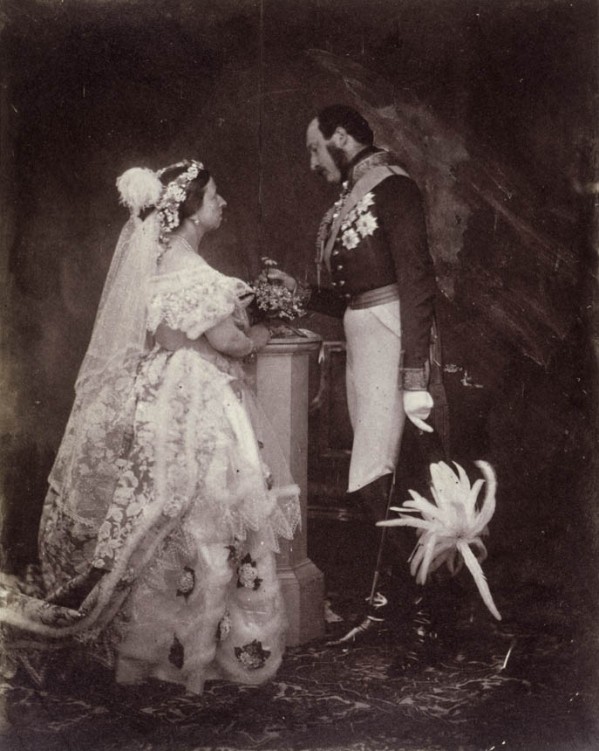
--I think the most widely known wedding fact is that wedding dresses weren't always white. White didn't become the 'official' wedding dress color until the mid-1800s, during the first few years of the Victorian era. Queen Victoria wore a white dress for her wedding, and from then on it became customary for the bride to wear white.  
--The meaning behind various colors was always more apparent when it came to the choice in a bride's wedding dress. Between the Saxon era and 18th century, if a bride wore white it didn't represent innocence as it does today, it meant that she was bringing nothing with her to the marriage. Blue was the traditional color for a bride to wear to represent a bride's purity and innocence, but green was another color that was worn to show the bride's fertility. Italian brides wore green the night before the wedding for fertility, and some chose to wear it for the big day instead. Scottish culture was a bit different, however, as green dresses were associated with fairies and looked down upon if chosen for the wedding. 
--Black dresses were quite common for widows to wear if remarrying during the mourning period, and it is also said that Tuscan brides typically used to wear black wedding dresses, even if they weren't mourning. They were said to pair their dresses with white hats and fans. It was said that before the 17th century and in some cultures even after that time, wearing a black wedding dress was perfectly normal. 
--Since red symbolizes good luck and vitality in Chinese culture, most brides wore red wedding dresses and veils, the latter of which was said to be to keep bad spirits away the day of the wedding. Grooms wore their hair in a red sachet. Nowadays many Eastern weddings have integrated Western culture into the wedding so it's become quite common to see a bride wearing white for the ceremony, then change into traditional garb later on in the day. I'm not quite sure about the grooms and if the sachet is still a part of traditional Chinese ceremonies. 


Source


--The color of the dress was also used as a symbol of wealth, as brides with higher dowries or wealth usually wore whatever color they wanted (save for black, of course) and had more embellishments on the dress than poorer brides. Brides who were less financially fortunate usually didn't have a dress for the occasion; they just wore what they had. Before Elizabethan times, most brides didn't have a dress made specifically for the big day; they simply wore what they had and kept it as part of their wardrobe following the wedding. 
--While on the subject of the show of wealth from some brides, the material the dress was made out of was also a representation of one's financial status. Richer brides had elaborate dresses made out of velvet, silk or satin, while poorer brides wore cotton or linen, which were (and still are, actually) less expensive materials and easier to find. 
--Depending on the culture, veils were used to ward off bad spirits, as I mentioned with the Chinese weddings, but I read another article that said that sometimes veils were also used in different time periods for the purpose of hiding the bride's face if she was considered unattractive! Arranged marriages were a huge thing back in the day, especially if a substantial dowry was involved, and the couples didn't always meet each other before the wedding. If the bride wasn't pretty, sometimes the parents hid her face with a veil so her groom wouldn't see her until it was time to kiss her at the end of the ceremony. How awful, right? 
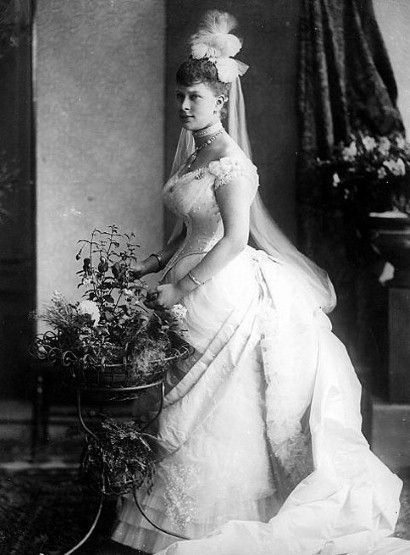
--Elizabethan wedding dresses followed the trend of being virtually any color, but they must be full-length gowns, with the option of adding a kirtle. I didn't see that as a requirement for many of the other types of weddings. The Victorian era brides had many more rules to follow, from the types of flowers that were most favorable to use, the colors they could integrate into the wedding, and the requirement that they have a train and veil of the same length if marrying in church. Edwardian brides veered more towards satin dresses with floral detail, whether it be in the hair or the gown, with corsets underneath (that were more flattering and much less stress on the body than the Victorian corsets that preceded them) and massive trains. 
--It was somewhere around the Victorian and Edwardian periods that wedding dresses began to take on the importance that they now have today. From the required kirtle during Elizabethan times to the train, elaborate bouquets and stiff rules of the Victorian era came the extravagant, frilly Edwardian era. From what I read, it was around this time that the dresses were becoming more individualistic, had a more romantic feel, and the overall feel of the event was very lavish.


Superstitions & Luck

I think life in itself comes with a list of its own superstitions, but I think the encyclopedia of superstitions that follow the wedding day is unmatched. I call today more of a realist society, where finding a superstitious person is considered rare (at least for me), but back in the day myths, legends and superstitions were what helped to dictate day to day life as well as any special occasions. Luck, fertility, prosperity and wealth were what most of these revolved around and thankfully there was no shortage of material to get my facts from since they were so common. Personally speaking, these are some of my favorite things to read about so I could easily make an entire post about wedding day superstitions alone just so I can tell you about everything I learned, but I'm a considerate being and I won't bore ya. You know, no more than I usually do. LOL What about you, do you like reading about superstitions, myths and the like?
Source


--I read about an old wives' tale (poem?) from the Victorian era about the days of the week and what they signified in terms of getting married. In some circles, it was Wednesday that was the best day to get married, while Saturday was considered to be the worst because it was believed that no good luck came on Saturday. Kind of ironic since this is now the most common day to get married, right? In Italy, Saturdays were reserved as the day when widows remarried; everyone else got married on Sunday. Any other day was considered unlucky. The Victorian era was quite different, as the focus was mainly not interfering with peak farming months and marrying on Sunday was off-limits. 

--In addition to the days of the week, in some cultures there was focus on the amount of luck that came from the different seasons and times of year as well. Old school Italian culture dictated that nobody was to get married during Lent or the month of May, and marrying during the month of August was highly discouraged. Another old wives' tale (poem) stated that marrying during the spring and summer seasons was best, because these times of year invited prosperity, success and joy, but marrying during the colder seasons invited coldness, infertility and ultimately the failure of the marriage. 

--Chinese tradition didn't allow you to pick just any date to get married, like we can do now. The entire wedding date had to align correctly, because if it didn't it could spell bad fortune for the couple's marriage. The date had to be timed and selected very carefully in an effort to find the date that brought the most good luck. Sounds more stressful than planning the rest of the wedding!

--As if it couldn't get any more difficult to choose a day, month, year, season, time of day or color to get married in, there were even old wives' rhymes about what the different colors symbolized in relation to getting married. White, blue and pearl seemed to be the only colors that didn't guarantee bad luck in some fashion. 

--As I mentioned above, Chinese brides often wore their wedding veils over their faces, partially to ward off bad spirits, but according to Italian tradition, tearing a piece from the bride's veil was said to be the good luck charm for the couple. 
--Scottish brides used to have a specific cake made just for them for the sole purpose of having it broken over her head following the wedding. Depending on how the bridescake broke over her head, it foretold the amount of luck that the marriage would have. This is sort of similar to the breaking of a glass at an Italian wedding reception, where the pieces of broken glass would be counted, and the number represented the total amount of years that the couple could enjoy a happy marriage. 


Source


--In most circles, encountering a funeral or any other omen of bad luck on the way to a wedding is not the best indicator of good fortune. For Italians, it's a bit more complex. The wedding party usually walks to the ceremony first in prep for the bride's walk later, but tradition states that if either a funeral procession is encountered on the way to the ceremony, the party must turn around, go home and start over. Obviously, this set many wedding processions back, but once the party arrived at the church, the elder performing the ceremony was usually informed and he led the party through a prayer to ward off bad spirits immediately before the wedding began. Scottish legend adds pigs to the bad omen list if seen on a wedding day. 
--Traditional Chinese weddings back in the day were actually about the groom, not the bride. It was considered to be his day. In the 48 hours leading up to the wedding, the groom's family had a large task to undertake. The groom's parents made the bridal bed the morning before the wedding, and that night the groom would have to sleep in it. The morning of the wedding, the groom's nephew had to jump on the bed. This was said to be a practice to wish good fertility on the couple. Newer variations of this tradition have the groom's parents changing the bedding and leaving it untouched, or the groom having a younger male relative share the bed with him the night before in a tradition that was said to be a prayer for the family line to continue.
--For Italian brides, it was seen as a bad omen to have unmarried women around a newly married man, so all of the bridesmaids had to already be married at the time of accepting the bride's request. 
--During Victorian times, when the couple leads the procession out after the wedding, it was considered bad decorum (decorum really was everything back then) to acknowledge anyone in the congregation, so both the bride and groom had to keep their eyes forward as they walked out. 

Source


--Including bells in the wedding ceremony is one that I've seen across a few cultures. Guests at Irish weddings used to be given small bells to help ward off evil spirits, but nowadays rather than giving every guest (which can be sizable depending on the wedding) a bell, some churches simply ring the bell following the ceremony. 

--Another old wives' tale that I'm sure many single women had to keep in mind was that if they served as a bridesmaid three times, they supposedly would never be the brides themselves. I've never been a bridesmaid, but I probably would have been horrified if I had more than three friends who got married before I did. lol 

--Irish brides used to carry a horseshoe made of iron with them to the wedding for good luck and usually continued to do so afterward to ward off evil spirits and maintain a happy marriage. This isn't too unlike the Italian tradition of the grooms carrying iron in their back pockets to ward off evil spirits. 


Cultural and Era-Specific Customs

This section is probably my favorite out of the three. I love learning about different cultures and ways of life throughout time, because most times the older ones are so much more different and distinctive in their own way. This extends to weddings, where I've gotten to read and learn about so many fun things from the eras I chose to research. 

Source


--The Scottish way of asking for a daughter's hand seems both fun and stressful, because the hopeful groom would have to visit the bride's family and prove himself by completing a number of obstacles and tasks set by her father in order to earn the chance just to ask for the lady's hand in marriage!

--In some places in Germany, the hopeful groom would have to bring his father and godfathers to speak with the bride's parents before asking for her hand in marriage. If the request was accepted and both the bride and her family agreed, then a mini-celebration commenced. If they seemed a bit unsure, however, then the hopeful had to return for another meeting and try to convince the parents. 

--When Chinese brides got married, it usually meant it would be the last time she'd get to see her family. From that point on, she takes on her groom's family and friends as her own. Because of that, she would go into seclusion in the days leading up to the wedding so that she'd have the time to say proper goodbyes to everyone in her life. Many brides in various cultures had to deal with this, but that was more of a proximity issue if her husband didn't live in town. 
--Dowry was a big thing across a number of cultures, as was the preparation of a trousseau for the bride. For Scottish brides, they were expected to bring bedding, table and kitchen furnishings for the marital home as well as money, sheep or a goat if a dowry was involved. If the bride was unattractive, the dowry matters were a requirement as it was probably said dowry that convinced the groom's father to let the wedding commence. 

--Venetian brides usually had two dresses for their weddings; one was for the ceremony and the other was for the reception but in an odd twist, the nicer dress was for the reception. 

Source

--Up until around the Victorian era, everyone had designated times at which they were to get married. Royals and commoners had separate times of day, with commoners having up until 3pm and royals having . This is in direct contrast with Sicilian marriages, which usually took place at night. 

--In Colonial and Victorian times, invitations were commonly sent out and most weddings took place in a church. Country weddings were also big during this time, and for the wealthy it usually turned into a weekend-long event. For Elizabethan-era brides, however, invitations weren't necessary. Most towns and villages at that time were very small, so they just weren't needed because chances are that everyone was already aware of the wedding. Everyone was allowed to attend but those in mourning were encouraged to lose themselves in the crowd if they chose to attend. Strict social standing policies were enforced, meaning the poorer guests had to stay in the back of the congregation.

--Scottish hen/stag nights sound like they would simultaneously be the most fun and humiliating night of the bride and groom's lives. The hen night used to feature the bride, carrying around a chamber pot with salt in it, with male passersby being encouraged to donate money to the pot in exchange for a kiss from the bride. Stag nights allowed the groomsmen or male relatives to cover the groom in ash, soot, treacle (which is a gross mixture of molasses, sugar and corn syrup), flour and feathers. So you might as well say the groom was tarred and feathered. LOL He was then walked around the village in said getup, with the instigators finding as many people as possible to come and laugh at him all night.
--Around the 1800s, it was practically law that unmarried women were allowed to wear their hair down and loose, but once they were married they were required to put it up in a bonnet. From what I read, the wedding day can be exempted, but after that any loose hair was required to be pinned up and away from the face. 

--Instead of tossing the bouquet or garter during the reception like in America, Scottish brides used to throw a decorated ball after leaving the church, while the groom used to throw coins. From what I read, these are now outdated traditions since they were known for causing injuries. lol 
Source


I know this one was super late, but when I tell you now in July that I was over the wedding theme, I mean it. It's much harder to motivate yourself to do something when you're not really in that mindset anymore. But I'm glad to have it finished because now I don't have to worry about it anymore. I loved reading about all of the stuff, but that joy didn't carry over to writing about all of it. LOL I hope this wasn't too all over the place and you learned some old school wedding traditions that you hadn't heard about before. I apologize if you're more learned on the subject than I and didn't learn anything new. Tomorrow we'll have July's Vintage Spotlight to close out the month, which I've been excited to finally start working on. I'll see you tomorrow!

post signature
Read More »

Wednesday, July 22, 2015

May Vintage Spotlight: Picnics & Vintage Picnic-Friendly Foods

Howdy! I know I didn't come up with Spotlights for January through March and I'm sorry for that, but I thought that maybe that'd be a bit too much to bombard you all with in addition to the other months that I was already going to post, so I started from May instead. But anyway, I first got the idea to make a picnic-related post back during spring, when the temps first started to warm up and I didn't have to wear several layers of clothes to go outside anymore. 
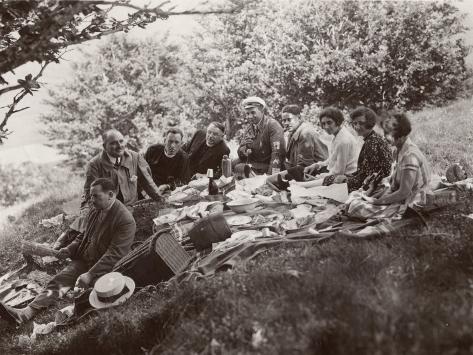
Source--Please read the source post for this photo. Did you all picnic like
this as well?
I think I've always liked picnics, mainly because I love being outside so much. As a kid, sometimes the family would get a bunch of sandwiches and stuff packed up into a basket and spend the day at the park. To this day those are still some of my favorite memories. Since I live in what is undeniably a desert, the 'in' place for a good picnic day was one of the local parks. Most of the time it was on a spur of the moment kind of thing, but it was always so much fun. The parks were packed with families, who were either picnicking as well or having parties, and the sounds of kids playing greeted you from around the corner. Picnic blankets, tents and umbrellas were spaced out throughout the park, and there were various puffs of smoke throughout the park from the portable grills. After the blankets were laid out, us kiddos were turned loose, where we played hard for as long as we could. The conspiracy theorist in me always came out during this time, because after that first child got called away to eat (which to us felt like punishment and the rest of us prayed we wouldn't be next LOL), it seemed like most of the park took a lunch break. We suspected the parents did this on purpose. lol
Source
Of course, there were some rebels (ha), but for the most part, lunch was a domino effect. We'd eat and rehydrate, rest for awhile, then play some more before chasing the ice cream truck for some frozen goodies. The mosquitoes usually attacked around 6 or 7, and that's when families would start packing up. Sometimes some of the families would stay long enough for us kids to get a few good runs through the park sprinklers, then the day was over and if there were any leftover sandwiches, that was dinner as everyone was usually too tired to do much of anything once we got home. By the time I got in the front door, I was sweaty and exhausted but so happy I could burst. After dinner and a good shower, it was straight to bed for me so I could get up for church the following morning. It was a day of fun, food, family and new friends, all of my favorite things. In retrospect, I wonder if most of these parents didn't plan these picnics simultaneously because they realized that it was the best way to get a mass amount of children to sleep without the usual issues. Hmm....
Source
The tradition didn't continue in our family as the number of kids grew to 5, partially because we fell on tougher times so the focus turned to just getting through the day, and partially because it was an increasingly large hassle to get all of the kids in the car at one time to go anywhere. I think this is a struggle with many larger families, so if you're a parent or an older sibling like me who had to help with the wrangling, then you know exactly what I'm talking about. When the kids were much younger, there was always someone slipping back out for something they'd forgotten, to put something back that they tried to sneak in the car, or simply because someone had decided that it was a good time for a tantrum and no longer wanted to go. I empathize with parents who still have to go through these things. No joke, it used to take a good half hour to get everything together, all of the kids together, hustle everyone into the car, get them buckled in, keep them buckled in, and get to where we needed to go with all limbs intact. It was much of the same when trying to get back home from wherever it was that we were. Besides that, this was a new generation of kids, so if we turned them loose in the park, they'd come right back a few minutes later, bored and wondering when we were going to go home so they could watch tv. I can completely understand why my mom abandoned the idea. lol 
Source
This calm setting was never my rowdy family.
 It still isn't, and half of us are grown now. LOL
 As an adult I had a few more health problems and one of the things I hated about it the most was that it took the sunlight from me. I'm a nature buff and one of the biggest problems with being homebound was that I could no longer enjoy simple things like taking a walk, going somewhere to watch the sun set, or getting caught in a random drizzle. I wasn't going outside, and I got all of the heat from the warmer months via bad air conditioning lol, but there were definitely no picnics. My immune system is insanely low as a result of these health issues, so obviously going out in cold weather was not an option that I exercised often, hence why on the few times I did have to go outside, I usually wore two layers of clothes if the temperature was even slightly below 55 degrees. I'd like to find a healthy medium temp between freezing to death and having to be half naked to avoid heat stroke, but I live in Texas. There won't be a healthy medium until October. LOL 
 
Source
I'm allergic to hot dogs, but this is awfully cute, right?

But back to the point. Picnics, I think, are subjective in terms of what kinds of food to serve. The French had more of a luxurious take on the idea. They brought foie gras, caviar, fancy meats, the works. Americans went for cold chicken, sandwiches, salads, and sweet treats. The English liked full-on, elaborate meals with meat pies, seafood, hard-boiled eggs, and even champagne for the more wealthy. I read an article where sometimes the wealthier picnickers even brought along their servants for a full-service picnic. Nowadays I don't see anyone at the park during the weekend, save for the teens who hang out at the skate park or the little leaguers playing a game there. I don't often see picnics anymore and when I do see it now, the food options lean more towards fast food and simply eating it in the park. But I like the original concept of picnicking--making a tasty meal specifically for that purpose, packing it up in a basket (or cooler, if you're bringing perishables or drinks), and taking it to the park, where you can nibble on the contents at your leisure throughout the day. 
For me, a picnic includes lots of nibblies. I love food, but my stomach usually can't accommodate it all (LOL), so normally, I nibble throughout the day anyway. I've been really interested lately in what people were eating at picnics and parties back in the day, so I turned to my BFF, the 'Net, to see if I could pull up some recipes. Now I have to admit, while I don't mind many of the recipes from the '50s, there are also a bunch of them that simultaneously provoke nightmares and nausea. I'm going to try to avoid those. LOL


Source
I know this isn't a vintage recipe per se, but I wanted to post this one since I couldn't find the original recipe for the bacon and cheese pie photo I came across on Pinterest. If you're going out in the morning, whether it be for a brunch at a park or in the backyard, I think this would be a great finger food to bring along. There's a great mixture of my favorite breakfast foods, the portion sizes are good, and they're cute to boot. Hell, I'd make these even if I wasn't going on a picnic. lol


Source
I'm not a big fan of all the recipes on these pages, but this photo is straight from a mid-'50s cookbook called "Let's Eat Outdoors," which focuses on nothing but different foods to bring to outdoor events. What cracks me up is how Dixie cups are being hyped to high heaven. Don't get me wrong, disposable cups, plates and cutlery are great, but I'm not that stuck on them. lol My favorite recipe from this photo is the Sundae Surprise, but the reason why I included the photo was because of the 'box lunch picnic' idea. It would certainly save on space, time and cleanup to just fix plates, close them up and take them along, already prepared. 


Source
I didn't like a lot of the salad recipes I came across, but I love panzanella, minus the artichokes and anchovies. lol Since this salad gets better the long that it sits, this would be an excellent make-ahead dish that you can prepare the day or night before your outing, which saves a lot of time.


Source
This is another excerpt from "Let's Cook Outdoors" and I included this photo because of the butterburgers recipe on the second page; this would definitely be something for the more ambitious picnicker who doesn't mind doing some cooking the day of the picnic. On an unrelated note, Karo and Spam, who else remembers those? The former is included in mass amounts in that flapjacks recipe up above. I don't mind flapjacks, but I'm not digging the Spam and blueberries being included. I'm also not about a life which includes that Short Cut Salad on the other page; I'm not a fan of cottage cheese anyway but I'm definitely not going to eat it with fruit. Whenever I see people eating it, I want to ask them, "Why?", which I know is rude as all hell, but I mean the question honestly because I really can't find anything tasty about it. If you eat cottage cheese, how do you like to eat it?


Source
For people who don't have guts that hate them, potato salad is a great option for picnics. That isn't the case for me lol, but I do like the recipe. It's very simple, doesn't take long to prepare, and after chilling it sufficiently wouldn't be hard to pack up and take along. Even though it's full of mayo and egg, things that are very perishable if not properly monitored, it's still become a staple picnic and warm weather side dish. I love potato salad, but I've really been jonesing for some cold macaroni salad lately, which is also a good option for picnicking. 


Source
This is a copy of a Woolworth's menu from the '50s, and I included this because of the sandwich options. Another staple of picnics is a good sandwich, and even though I don't see a club sandwich or just a regular ham, cheese and turkey sandwich, I think all of these are easy options for a picnic. They aren't heavy on the stomach, they're all easy to prepare and don't take up too much space in the basket. Egg and chicken salad are also staples of many picnic menus, which is another reason why I wanted to include this photo rather than trying to find separate recipes for everything. I think the entire menu could be some inspiration for your own picnic menu. 


Source
I've noticed that deviled eggs are another favorite warm weather dish to take along, and while this is yet another thing I won't be eating in the heat, I love deviled eggs. The recipe we use now is the same one my gramma used when she and my gramps would entertain their buddies back during their heyday. My mom learned it from her, then passed it on to me. It's not like an heirloom or anything, it's just eggs lol, but it's cool to know that I'm making the same recipe that she once did. Something I've noticed since I started making the recipe was that if you make the filling and then chill it and the eggs separately first, then chill the eggs again after being filled, they hold a lot better and for longer periods of time. These are usually a holiday treat, not something we make on a regular basis, but I'd bring these to a party.


Source
I couldn't have a post about picnic foods and not include the OG of '50s picnics, fried chicken. Usually people took this to the park and ate it cold, and while I'm not a fan of eating it cold, I do love some fried chicken so I included this recipe from Paula Deen. Say what you want about her, but the lady can make some fried chicken. I think it suits the other side dishes in this little list of foods, it's not too heavy, and like the other dishes it's easy to pack up and discard when you're finished. 


Source
This here is a recipe for red velvet cake, and I included it partially because the recipe encourages you to make the cake from scratch rather than relying on a box mix. I've never made a cake from scratch before; to be honest I'm a little intimidated by the concept. I'm willing to try, but it scares me a little. I chose red velvet cake for a picnic rather than chocolate because it's a bit lighter on the stomach but doesn't sacrifice taste in the process. I also thought that if you wanted to modernize this recipe, you could make red velvet cake pops instead. 


Source
For a simpler option, this chocolate peanut bark is also easily portable, can easily be rationed out between multiple people, and sounds very simple to make as well. Obviously, the name of the game with picnic recipes is simplicity. You're already taking a number of things along with you, no reason to complicate the prep in addition to everything else. I like the concept of a fancy picnic, but I have simple preferences. A few finger foods, small sweets and a drink option or two and I'm good. Speaking of drinks, though, here's a recipe for a simple syrup that you can use to make lemonade for your day out.


Source
For me, lemonade is the perfect drink for a hot day. Y'know, other than water. lol If it's too sweet it tends to leave a heavy aftertaste and I'm not about that life, but if done correctly it's light, lemony and refreshing. And finally, I had to go with the other staple of picnic drinks, some good ol' iced tea. 


Source
This isn't a vintage recipe, but I couldn't find a photo of iced tea so I just went with this modernized iced tea instead. I love strawberry lemonade tea and it's on my bucket list this summer to make some sun tea, so this seems like the perfect combination of both things. This is another easy make-ahead item and if you make it early the morning of the picnic, it'll be ready by the time you leave. The instructions for this recipe are also very simple and don't involve a lot of ingredients, another thing that I like about it. I also came across a tip that said grilling the lemons releases the sugars, so I wonder how this recipe would work if you dropped a few of the grilled lemons slices with this mixture and let it sit that way. 


Let me tell ya, if I hadn't found a site called Hey, my mom used to make that! when I was searching for recipes, this post honestly may have never gone up. So massive shout-out to whoever runs that site, because it saved this post and my little yellow bum in the process. The site has an abundance of '50s recipes, and luckily for me there were a few picnic-friendly recipes I could grab a photo of for this post. Unfortunately for me, finishing this post also meant I had to sift through recipes of epically nauseating proportions to find what I wanted. lol But anywho, that does it for me for now. I hope you liked this post and I didn't bore you too much before we got to the actual recipes. I'll see ya tomorrow with June's Spotlight! 

post signature
Read More »

Thursday, April 30, 2015

Vintage Spotlight: The Art of the Confidence Trick

Howdy! I know this Vintage Spotlight is a bit different from anything I've featured on the site so far, but with this month being the home of April Fools' Day I thought I'd focus on a form of pranking. Unlike many April Fools' pranks though, these are neither light-hearted or innocent in nature. Confidence tricksters take the essence of a prank, thriving on the unsuspecting nature of the victim, building their confidence, but then they take things to another level by making a bet that the victim inevitably loses.
Source
During my blogger/satellite hiatus last year, I found the first season of a show called Hustling America on Netflix, where a magician and con artist retraces the steps of some of America's best confidence tricksters, recreating their most infamous cons and pulling a few of his own in the process. I was really intrigued, because this show explores a lot of the detail that confidence tricksters go to in order to truly catch and trick their victims. The fact that the host, Alexis Conran, is also a magician added another level of intrigue to it for me because aren't they confidence tricksters in a way? I loved the show, and I really liked hearing about these old school con men. I didn't like that they fleeced innocent victims, but I did love the genius and the thought that went into some of those ideas. So I thought I'd talk a little about the more famous confidence tricksters, a few of whom had their cons recreated on Hustling America. Some of their tricks are still being used today, others have had their cons revised to include a bit of current elements, and others are now the stuff of legends. 
Before I get started though, I hope that this post doesn't make it sound like I'm glorifying con artistry; I'm not. I don't like the concept of fleecing innocent people, taking their money and not doing so in a playful way. These tricks aren't fun and games. It's basically thievery because they go into the situation knowing that they're probably going to win and the poor bloke won't know what hit them, and when they do realize it it'll be after their pockets have been emptied. They can be humiliating, degrading, and devastating for those who get taken for their money. Some people lost their life savings through confidence tricks back in the day and I'm not trivializing the damage that these con artists can do to one's life. I will say though that I'm a bit intrigued at the science behind these tricks. I'm interested in the trick itself, not the damage and fallout it creates. I thought I'd just get that bit out of the way before I move into the meat of the post. Since we opened up the month with the biggest pranking day of the year, let's close it out with some cons throughout history. Let's get started!
 

Hustling America had a heavy dose of inspiration from this man, who was infamous for his numerous talents, hustling being one of them, in the early 20th century. Titanic Thompson, "The Man Who Bet on Everything," thrived off of many types of hustles, but he really would bet on anything. Pool games, golf, horses, one-off bets, sports, all of it. He spent all of his free time either perfecting a hustle or creating new ones. His mind constantly raced at the thought of creating and performing new hustles successfully. One of his many specialties was the proposition bet, where he'd proposition a mark with a trick that usually sounded unbelievable, causing the mark to think they were about to make some easy money and agree. Here are some of the hustles he performed:


Source
--Playing someone in pool or golf right-handed and purposely throwing the game, then proposing another game, but with the 'disadvantage' of him playing left-handed. Thompson was ambidextrous and primarily left-handed, a little known fact at the time, so this hustle was usually successful.

--Betting someone he could throw a certain amount of cards into a hat placed at a distance. This was a trick recreated on Hustling America, where it was revealed that Titanic had practiced this trick for hours, and Alex later had to practice for hours as well in order to properly recreate it.

--Finding a dog owner and tossing a marked rock into a nearby lake, then betting the owner that the dog would bring back the exact rock. This bet was successful because Titanic usually marked several other rocks with a similar appearance before finding his mark, then simply throwing the rock into the general vicinity of his marked rocks. This bet was also recreated on Hustling America.

--Another trick of Titanic's was betting his mark that he could toss a lemon (or in the case of Hustling America, a walnut) over a wide building. This trick was usually successful and the mark could never figure out why they failed. The lemon (and walnut) was pre-weighted with a tiny lead ball before the trick was executed, so the weighted object always cleared the building, while the other did not. 

--My favorite of Titanic's tricks, mainly because it was so obviously a con, was his bet that he would put a hat in a closet, close the door, and successfully toss the cards under the door into the hat. The mark always fell for it, probably because of its 'unbelievable' factor, and when the mark was able to see that the cards did indeed make it into the hat, they were always stunned. Titanic was good with the cards, but he wasn't that good. His friend would hide out in the closet, where he'd put the cards in the hat as they slid under the door. The mark never found out, and this too was usually a successful hustle. 


There are many other tricks of Titanic's that he perfected over the years, but those were some of my favorites. Let's move on to a different kind of con artist. This one intrigued me because I'd never heard of it before until I started researching for this post. To my surprise (and permanent amusement), the phrase, "If you believe that, I have a bridge I'd like to sell you," has complete basis in truth. People have been trying to sell bridges and public landmarks for years now. But there's one man who tops them all in that category. 


Source
Gregor MacGregor pulled probably the largest confidence trick of all time. Back in the early 1800s, he told people he had a country to sell them. More specifically, he had land in a new country he wanted people to invest in. The fictional country of Poyais was said to have a stable government system in place, was overflowing with unused natural resources, and had a small community that was looking to be expanded. MacGregor brought his A+ game to convince his marks; each investor was shown detailed maps of the land, the country's currency, and even a book that went into more detail about Poyais. There was even a coat of arms for this place. After getting settlers to invest, MacGregor went out, claiming to be putting the money into the Poyais government and gain more investors, but was never seen by any of the settlers again. Nearly 300 British residents invested in buying plots of land and set out on ships to start their new lives. So imagine their surprise when they traveled to the designated location only to find that not their supposed new land, which some had invested thousands of pounds in, was actually an uninhabited patch of jungle. The journey to the land was a rough one, and many of the settlers succumbed to illness. MacGregor attempted to pull the trick again in France and had succeeded in getting interested French settlers, but was arrested before the con could fully be pulled again. After a few years, he returned to the original scene of his con, in London, where he continued to pull lesser forms of property fraud cons for awhile afterward.

--Salting gold and uranium mines were both popular scams, especially during the Gold Rush and uranium boom of the '50s. Scam artists would find gold mines, salt them well and slip a few uncut diamonds throughout. then sell them to an eager buyer who ended up with fool's gold at best, and absolutely nothing at worst. By then, it was too late and the hustlers were already gone, presumably off to fleece their next victim. During the uranium boom, the hustlers would wrap gas mantles around a stick of dynamite and set them off, and for the miners who relied on the Geiger method, the high radiation reading was usually the selling point. Again, by the time the victim found out they'd purchased a salted uranium mine, the hustlers were long gone. 

--One of the smaller, yet still prominent cons is the ever-popular 'swampland for sale' hustle in Florida (which I learned about from watching The Nanny lol). In this scam, a 'representative' from a developing company would approach the victims, convincing them to purchase the land sight unseen. Back in the '60s and '70s, the scam had become so popular that a law was created in order to restore the state's damaged reputation. 

--The most recent reported case of land fraud was earlier this month in Ludhiana, India, when three people were arrested for selling land and using a fake owner to do so. The land, however, was already owned, and the men were quickly apprehended after the new 'owner' moved in on the land, which technically made him an encroacher (Spellcheck is saying that's not a word, but it is now lol) on the original owner's property.


Here are a couple of infamous "I've got a bridge I'd like to sell you" landmark cons:


Source

--George Parker sold a number of public national landmarks to people, but he is most commonly known for selling the Brooklyn Bridge to citizens; sometimes he even 'sold' the bridge to two different owners in a week. This continued for 30 years! Some of the new 'owners' tried to set up toll booths on the bridge, enticed by Parker's claims of sudden wealth due to the toll fees, and were stopped by the police, where they were informed that they'd been fleeced. It is his Brooklyn Bridge con, actually, that gave birth to the "I've got a bridge I'd like to sell you" expression. He also 'sold' Grant's Tomb, MSG, and the Statue of Liberty, but his most consistent con was the Brooklyn Bridge.

--Not long after Parker started his Brooklyn Bridge con, a man named Victor Lustig jumped on the bandwagon. He was a con man who pulled a number of different hustles, but was known for what is now called the money box scheme, and for selling the Eiffel Tower twice. By going to elaborate lengths, he successfully convinced a group of men that the Eiffel Tower was going to be dismantled and sold off for scrap metal, and received bids as well as a bribe. He tried it a second time, but was unsuccessful. Lustig, much like the others on this list, was a career criminal. His tips and tricks for running a successful con were so well-researched through his interactions with his marks that the legendary "Ten Commandments of the Con Man" is attributed to him. 


Source


--One of the easiest cons to pull back in the day was in the paranormal field, where the bereaved and spiritually curious were always ripe for the taking by the clever men and women who learned all the tricks of the trade. The name that came up over and over while I was researching this post was the Fox sisters, who conned innocents for years before being revealed as frauds. The Spiritualist movement in the 1800s was born partially through their 'gifts' being exposed to the public. After receiving their first bit of attention, their older sister joined in, making the Fox spiritualists a trio act. The seances and communication efforts began to increase in intensity during this time as well; from the initial rapping that usually signified the 'communication attempts' of a spirit, eventually, 'spirits' began to appear and items in the room began to levitate. The Fox sisters became one of the poster acts of the Spiritualist movement, but their fame came at a price. The movement declined some time later in both popularity and acclaim when many of the popular mediums were later exposed as frauds. By the Fox sisters died, they were penniless drunks, were said to have fallen out with their older sister, and had since confessed (then recanted) to lying about their abilities to speak with the dead.  


--That brings me to the typical paranormal cons that we still see on some level today. Psychics will ask questions that help them determine basic things about you, like your name, names in your family history, or the state you were born in. Notice that many quacks won't ask you questions or details that cannot be answered with a 'yes' or 'no.' If you're into astrology and horoscopes, mediums who claim some deeper spiritual connection will send you emails informing you that you are actually cursed, but with their help you can remove the curse and unlock the life of your dreams. For a price, of course. lol 

The latter of these I actually fell for a few years ago, or at least the first half of it. I got some emails from a medium, telling me that my life was cursed and enticing me with questions that she says I'd asked myself while trying to better my life. You don't really need to be a psychic to tell me that my life sucks LOL, but I still wondered if there was one who was genuine amongst the black hole of quacks making a living in this field. And I had asked myself some of the questions in her email, but they were questions that everyone at some point asks themselves. I didn't realize that at the time so I said, I'll bite, and responded to the email. I had to answer a questionnaire where nothing personal was asked, it was about my birthplace, birthdate, desires and fears and what I needed most, all in multiple choice form. I got an email a couple of days later, saying that I was due to come into a large quantity of money (which I'm supposing would have been wonderful for her, seeing as how she was about to ask me for a substantial portion of it lol) and blessings, but I hadn't removed the negativity from my life in order to receive them. Which was true, but isn't that true for most people who are going through a rough period? And when most people go to these psychics, what are they after? Career advancement, love, or money. If I already said I was in need of money, it's not too difficult after that to tell me what I want to hear. I wasn't sold, but I was desperate for answers, which is what these mediums thrive on. People will pay inordinate amounts of money to receive the 'right' answer when they're desperate. Unfortunately for this one, I was desperate but broke, so there was nothing for me to give her. 

When I didn't pay, I started being sent emails talking about how something bad was about to happen to me and I really needed to talk to her, I really needed her tools for how to cope with what was about to happen. At first it really scared me, because I already had enough going on in my life and had no idea what was coming next. And that's when things clicked for me. If you knew that something bad was about to happen to someone and you had the opportunity to warn them, wouldn't you do so free of charge? Would you spend time fear-mongering them, teasing them with the knowledge you have, scaring them into paying you? And if they don't pay you, would you just let this bad thing happen to them? I wouldn't. So I looked up this 'medium,' and as it turns out, she'd been reported to several different paranormal and regular scam sites, where she was said to have taken thousands of victims' money without ever delivering on her promises. Well of course she didn't deliver, she'd been lying! 

Nothing bad happened to me on the date that she said, I removed my email from her system, had it blocked in my incoming email addresses, and never heard from her again. I know that makes me look like a fool, but I was going through a really intensely bad chapter in my life. I was looking for an answer wherever I thought I could find one. But that's what frauds prey on. The desperate, the life-weary, the naive. And for many people, fear-mongering works to separate them from their wallet. I didn't know how psychics worked before that, but I learned my lesson. I understand that you won't give out a genuine gift for free, but you also won't scare and tease your victim with what you know about them either, then sit back and let this unknown thing happen to them, knowing you could have helped.


And on that personal, yet slightly embarrassing note, I'll cut things short (ha) here rather than run the risk of this Spotlight running longer than my Harlem Renaissance post (which would be an enormous stretch but if anyone can do it, it's me LOL). I didn't cover larger schemes like the Ponzi, Madoff and Catch Me If You Can because we already know how those ended up. I wanted to do some others that hopefully you hadn't heard about before. I really do hope you all have been enjoying these posts; the Instagram and different Vintage Spotlight posts have been a lot of fun to research and write out and I hope you've been getting something out of them. I gave my Files series a much needed break this month but they'll be back next week. Anyway, I sincerely hope you've enjoyed reading and learning along with me as I do these posts. I'm trying to step it up and make my Spotlight posts fun but informative. This will probably go live during TNT, so I hope you're watching. See you on Monday!

See you soon, 
post signature
Read More »